Dog Brain Health
Dementia Drug for Dogs: A Practical Comparison


A dementia drug for dogs must be individually selected, prescribed, and monitored by a licensed veterinarian, as there is no single best medication. Supporting an aging dog showing signs of cognitive decline relies on a multimodal approach that integrates direct veterinary care, dietary adjustments, and routine environmental enrichment.
Navigating the options for an aging dog can feel overwhelming when you are trying to understand how to best support their changing mind. While prescription medications represent one pathway, a complete care plan often looks at the entire picture of senior wellness.
Related: apple cider vinegar for dogs
AT A GLANCE
The pick: Our pick is NeuroChew, our own daily brain-health chew, held to the standard this guide teaches.
Reason one: Built for daily brain support, not sedation.
Reason two: Veterinarian-approved, with Dr. Ruth Roberts, DVM, CVFT as the named endorser.
Reason three: A 60-day guarantee, refunded even on an empty bottle.
Skip it if: Your dog has new, sudden, or severe symptoms, is pregnant, nursing, or a puppy, is on medication, or is managing an existing condition without your veterinarian's input.
What is canine cognitive dysfunction syndrome?
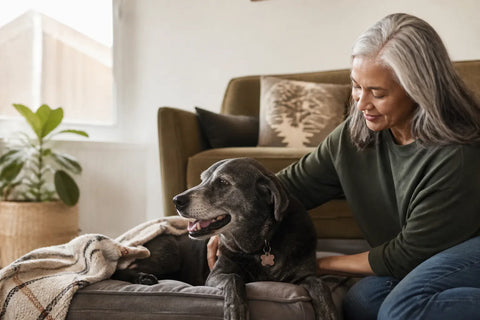
Canine cognitive dysfunction syndrome (CDS) is an age-related neurodegenerative condition in dogs that shares clinical and behavioral similarities with human dementia. Supporting an aging dog with signs of cognitive decline often relies on a multimodal approach that integrates dietary adjustments, routine environmental enrichment, and direct veterinary care.
Scientific evidence regarding the long-term benefits of specific diets and therapies is still emerging, and individual responses to cognitive support programs can vary from dog to dog.
Source: Cornell Riney Canine Health Center and Today's Veterinary Practice and Peer-reviewed article via PubMed Central and GeroScience via PubMed Central
Canine cognitive dysfunction is an age-related brain condition that shares many clinical similarities with human dementia.
Why is my older dog pacing and restless at night?

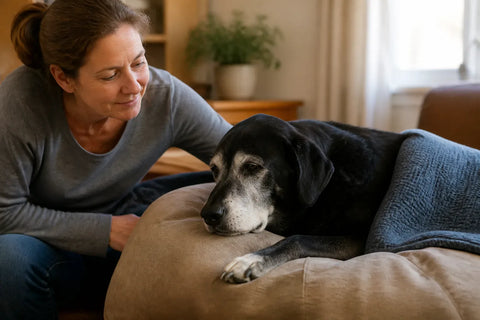
Disruptions in normal sleep-wake cycles may occur in senior dogs with cognitive dysfunction syndrome, often manifesting as nighttime restlessness or pacing. Keeping the home layout consistent and predictable can help reduce anxiety and disorientation in senior dogs experiencing age-related cognitive changes.
Engaging senior dogs in low-stress mental stimulation, such as interactive food toys or short, predictable training sessions, can help support their overall well-being.
Keeping an older dog's mind active is just as important as keeping their body moving, provided the activities do not cause physical or mental exhaustion. Simple puzzle feeders, licking mats, and snuffle mats are excellent tools for gentle cognitive engagement.
You can also run short training sessions focusing on basic, familiar cues with plenty of positive rewards.
Related: dog cognitive supplements
This type of gentle mental stimulation helps stave off boredom and maintains a comforting, predictable routine for your dog.
Source: Cornell Riney Canine Health Center and Today's Veterinary Practice
Nighttime restlessness and pacing in older dogs are frequently linked to altered sleep-wake cycles.
How should you choose a brain supplement for your dog?
Before starting any brain-supportive supplements or nutritional regimens, pet owners should consult their veterinarian to ensure the selected products are safe and appropriate for their dog. This step protects your senior dog from potentially harmful ingredient interactions and ensures the regimen fits their specific profile.
During your consultation, you can review the product's active ingredients, evidence levels, and printed concentrations.
Discussing these details with a professional helps you separate robust, evidence-backed options from marketing hype. Your veterinarian can also establish baseline behavioral markers to help you monitor whether the dietary support is working.
There is no single 'best' medication for dog dementia; any drug-based therapy must be individually selected, prescribed, and monitored by a licensed veterinarian.
Many symptoms of cognitive decline can mimic metabolic diseases, sensory loss, or pain, which is why a comprehensive veterinary examination is essential before concluding a dog has cognitive dysfunction syndrome.
Related: dog dementia medication
Source: Today's Veterinary Practice and Peer-reviewed article via PubMed Central and Cornell Riney Canine Health Center
Consult your veterinarian before introducing any new brain supplements to verify safety and compatibility with your dog's health.
What are the common signs of cognitive decline in older dogs?

Common indicators of cognitive decline in older dogs include disorientation (getting stuck behind furniture or staring at walls), reduced or inappropriate social interactions, disrupted sleep, loss of house training, and altered activity levels. Spotting these signs early is essential for owners who want to provide timely support to their aging pets.
You might observe your dog staring blankly into space, failing to greet family members, or walking in circles.
Punishing a dog for house-soiling or confusion related to cognitive decline should be avoided, as it can cause significant stress and exacerbate behavioral issues. Your dog is not behaving defiantly; they are experiencing physical changes in their brain that limit their control.
Using harsh discipline will only make your senior dog fearful, which increases their baseline anxiety and can make behavioral symptoms worse.
Instead, clean accidents calmly with an enzymatic odor remover and increase the frequency of gentle outdoor relief breaks. Approaching these moments with patience and understanding maintains the strong bond between you and your pet.
Source: Cornell Riney Canine Health Center and Today's Veterinary Practice
Identifying core behavioral changes like disorientation and altered sleep helps track cognitive changes in senior dogs.
How do medium-chain triglycerides support an aging dog's brain?
Medium-chain triglycerides (MCTs) can provide ketone bodies as an alternative fuel source for the aging brain, which may experience decreased glucose metabolism as dogs age. Antioxidant-rich nutrition may help mitigate the cellular effects of free radicals and oxidative stress in the aging canine brain.
Related: dog dementia prognosis
Source: Today's Veterinary Practice and AGE via Springer and Peer-reviewed article via PubMed Central and GeroScience via PubMed Central
MCTs offer a highly efficient alternative fuel source for aging brains facing altered glucose metabolism.
Where NeuroChew fits in all this
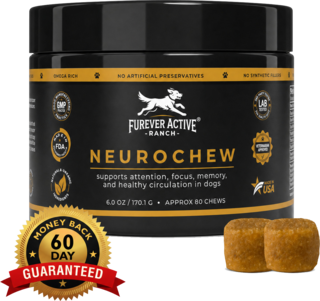
Full transparency: NeuroChew is ours. It's a veterinarian-approved daily soft chew that supports normal brain function and healthy circulation in dogs.
It's daily support, not medicine, designed to fit alongside your vet's plan rather than replace it. Dr.
Ruth Roberts, DVM, CVFT, puts it this way: "I support NeuroChew because it's the first dog chew that supports both brain function and healthy circulation!" If the signs above sound familiar, a daily brain-support routine is one of the simplest places to start.
Frequently asked questions
What's the best thing for a dog with dementia?
Supporting an aging dog relies on a multimodal approach that integrates dietary adjustments, routine environmental enrichment, and direct veterinary care. This includes keeping the home layout consistent and predictable to reduce disorientation, avoiding any form of punishment for cognitive-related confusion, and engaging your dog in low-stress mental stimulation like interactive food toys.
Please consult your veterinarian first before choosing any new supportive regimen for your senior dog. The concern you feel when your pet shows behavioral changes deserves a real medical evaluation to ensure their comfort and safety.
Whatever path you choose, establishing a predictable, compassionate daily routine is the most meaningful step you can take.
References
- Cognitive dysfunction syndrome, Cornell Riney Canine Health Center. https://www.vet.cornell.edu/departments-centers-and-institutes/riney-canine-health-center/canine-health-topics/cognitive-dysfunction-syndrome
- Enhancing cognitive functions in aged dogs and cats: a systematic review, Peer-reviewed article via PubMed Central. https://pmc.ncbi.nlm.nih.gov/articles/PMC12181554/
- Assessment of nutritional interventions for modification of age-associated cognitive decline using a canine model of human aging, AGE via Springer. https://link.springer.com/article/10.1007/s11357-005-4001-z
- Nutritional Intervention for Canine Cognitive Dysfunction, Today's Veterinary Practice. https://todaysveterinarypractice.com/nutrition/nutritional-intervention-for-canine-cognitive-dysfunction/
- Efficacy of a Therapeutic Diet on Dogs With Signs of Cognitive Dysfunction Syndrome, Peer-reviewed article via PubMed Central. https://pmc.ncbi.nlm.nih.gov/articles/PMC6299068/
- Enhancing cognitive functions in aged dogs and cats: a systematic review of enriched diets and nutraceuticals, GeroScience via PubMed Central. https://pmc.ncbi.nlm.nih.gov/articles/PMC12181554/
- Updates on Cognitive Dysfunction Syndrome, Today's Veterinary Practice. https://todaysveterinarypractice.com/behavior/updates-on-cognitive-dysfunction-syndrome/
As of July 2026
Get practical dog wellness tips by email
Occasional, useful guidance on keeping your dog healthy and happy. Unsubscribe anytime.
No spam. We respect your inbox.
Support your dog's brain health with NeuroChew
NeuroChew is our daily soft chew for dogs, made fresh in the USA. See the ingredients and how it fits into a healthy daily routine.
Learn more about NeuroChew