Dog Brain Health
Selegiline for Dog Dementia: A Practical Comparison


Canine Cognitive Dysfunction (CCD), also referred to as Cognitive Dysfunction Syndrome (CDS), is a condition in aging dogs that can lead to progressive changes in behavior and daily habits.
Most people do not search for cognitive options on a lazy Tuesday afternoon. They type it into a search bar at eleven at night, phone lit up in a dark kitchen, watching an old friend stare at a blank wall.
Related: apple cider vinegar for dogs
This practical comparison is built to help you navigate the medical, dietary, and daily choices before you.
AT A GLANCE
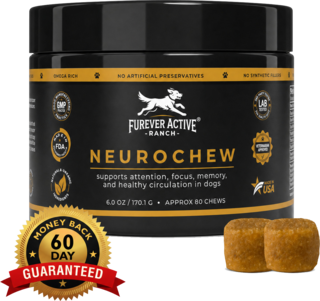
The pick: Our pick is NeuroChew, our own daily brain-health chew, held to the standard this guide teaches.
Reason one: Built for daily brain support, not sedation.
Reason two: Veterinarian-approved, with Dr. Ruth Roberts, DVM, CVFT as the named endorser.
Reason three: A 60-day guarantee, refunded even on an empty bottle.
Skip it if: Your dog has new, sudden, or severe symptoms, is pregnant, nursing, or a puppy, is on medication, or is managing an existing condition without your veterinarian's input.
What Is Canine Cognitive Dysfunction and How Does It Affect My Dog?
Canine Cognitive Dysfunction (CCD), also referred to as Cognitive Dysfunction Syndrome (CDS), is a condition in aging dogs that can lead to progressive changes in behavior and daily habits. It is the lay term for canine dementia, presenting as a leading differential when an older dog starts acting confused, disoriented, or aimlessly walking in circles.
Owners often notice their senior dog getting lost in familiar rooms or failing to recognize daily routines.
Clinical reviews on cognitive dysfunction syndrome highlight that as the brain ages, various vascular and structural changes occur. For instance, leukoaraiosis, which refers to periventricular white-matter hyperintensities linked to arteriolar vascular abnormalities, has been observed in aging brains.
Related: dog cognitive supplements
While decreased blood flow and general aging-brain changes are documented, these physical findings do not always correlate directly with clinical signs, meaning we must view them as associations rather than direct causation.
Dogs with cognitive dysfunction may exhibit a noticeable worsening of behavioral signs, such as restlessness, pacing, or vocalization, specifically during the evening or nighttime hours. Veterinary-prescribed therapies for cognitive dysfunction may assist in supporting a senior dog's daily function and quality of life, though individual responses to these therapies vary.
Source: Cornell Riney Canine Health Center and Today's Veterinary Practice
Recognizing the early signs of cognitive dysfunction syndrome is the first step in working with your veterinarian to establish a supportive care plan.
Can a Vet Help Me Find Prescription Options Like Selegiline?
A veterinarian can evaluate your senior dog to determine if prescription medical management options are appropriate for helping to manage signs of cognitive decline. It is important to have a veterinarian evaluate any changes in a senior dog's behavior to rule out other medical issues, such as pain, sensory deficits, or metabolic disease.
Sudden behavioral changes in older dogs may sometimes be associated with underlying vascular events in the brain, which require immediate veterinary evaluation to differentiate from gradual cognitive decline.
Related: does cosequin really work for dogs
Medical options prescribed by a veterinarian for canine cognitive decline generally require a trial period of several weeks before their effects can be fully evaluated.
Source: Today's Veterinary Practice and Cornell Riney Canine Health Center and Frontiers in Veterinary Science, 2025
A professional veterinary evaluation is indispensable for determining if prescription medical management is the right path for your dog.
How Can I Modify My Home to Reduce My Dog's Disorientation?

At-home management strategies, such as keeping a consistent daily routine and avoiding sudden changes to the home layout, can help reduce stress in dogs showing signs of cognitive decline.
Source: Cornell Riney Canine Health Center and Today's Veterinary Practice
Simple, consistent environmental modifications are highly effective at-home strategies for minimizing stress in senior dogs.
Can Mental Stimulation Help Support an Aging Dog's Brain?

Providing gentle environmental enrichment and mental stimulation, like food puzzles adapted to their physical health, can help support cognitive engagement in senior dogs. Diets containing medium-chain triglycerides (MCTs) provide an alternative energy source for the aging brain and may help support cognitive function in senior dogs.
Source: Today's Veterinary Practice and Peer-reviewed article via PubMed Central and AGE via Springer
Combining physical mental stimulation with precise, open-labeled active ingredients is an excellent way to proactively support cognitive wellness.
Where NeuroChew fits in all this
Full transparency: NeuroChew is ours. It's a veterinarian-approved daily soft chew that supports normal brain function and healthy circulation in dogs.
Related: dementia drug for dogs
It's daily support, not medicine, designed to fit alongside your vet's plan rather than replace it. Dr.
Ruth Roberts, DVM, CVFT, puts it this way: "I support NeuroChew because it's the first dog chew that supports both brain function and healthy circulation!" If the signs above sound familiar, a daily brain-support routine is one of the simplest places to start.
Remember to involve your veterinarian early to accurately diagnose behavioral changes and rule out other health conditions. Managing your dog's golden years is a journey that combines clinical guidance with daily, supportive care.
References
- Cognitive dysfunction syndrome, Cornell Riney Canine Health Center. https://www.vet.cornell.edu/departments-centers-and-institutes/riney-canine-health-center/canine-health-topics/cognitive-dysfunction-syndrome
- Enhancing cognitive functions in aged dogs and cats: a systematic review, Peer-reviewed article via PubMed Central. https://pmc.ncbi.nlm.nih.gov/articles/PMC12181554/
- Assessment of nutritional interventions for modification of age-associated cognitive decline using a canine model of human aging, AGE via Springer. https://link.springer.com/article/10.1007/s11357-005-4001-z
- Nutritional Intervention for Canine Cognitive Dysfunction, Today's Veterinary Practice. https://todaysveterinarypractice.com/nutrition/nutritional-intervention-for-canine-cognitive-dysfunction/
- Efficacy of a Therapeutic Diet on Dogs With Signs of Cognitive Dysfunction Syndrome, Peer-reviewed article via PubMed Central. https://pmc.ncbi.nlm.nih.gov/articles/PMC6299068/
- Enhancing cognitive functions in aged dogs and cats: a systematic review of enriched diets and nutraceuticals, GeroScience via PubMed Central. https://pmc.ncbi.nlm.nih.gov/articles/PMC12181554/
- Case Report: Ischemic brain infarction and cognitive dysfunction syndrome in an aged dog, Frontiers in Veterinary Science, 2025. https://www.frontiersin.org/journals/veterinary-science/articles/10.3389/fvets.2025.1563798/full
- Updates on Cognitive Dysfunction Syndrome, Today's Veterinary Practice. https://todaysveterinarypractice.com/behavior/updates-on-cognitive-dysfunction-syndrome/
As of July 2026
Get practical dog wellness tips by email
Occasional, useful guidance on keeping your dog healthy and happy. Unsubscribe anytime.
No spam. We respect your inbox.
Support your dog's brain health with NeuroChew
NeuroChew is our daily soft chew for dogs, made fresh in the USA. See the ingredients and how it fits into a healthy daily routine.
Learn more about NeuroChew