Senior Dog Care
Where Your Dog Sleeps Impacts How They Age


Where your dog sleeps changes how they age. Dogs sleep best in the same room as their family, on bedding free of heavy detergent and dryer sheet scents, away from the vibration of appliances and traffic. Fix those three and you support calmer behavior, better recovery, and healthier aging.
Key Takeaways
- Most illness shows up in sleeping patterns before it shows up anywhere else.
- Dogs are pack animals. Sleeping away from their people is a source of stress.
- Strong detergent and dryer sheet scents disrupt a dog's sleep.
- Vibration you cannot feel can keep a dog from settling fully.
- Disrupted sleep adds up over months and years, not overnight.
In this article
Most illness shows up in your dog's sleeping patterns before it becomes apparent anywhere else. How your dog sleeps has more to do with their health than you might think, and sleep quality is your first defense against most health issues and high vet bills.
Below are three simple things you can do to support calmer behavior, better recovery, and healthier aging over time.
Sleeping location and anxiety
Dogs are pack animals. If you only have one dog, then you are their pack. When dogs are forced to sleep away from their pack, many experience stress.
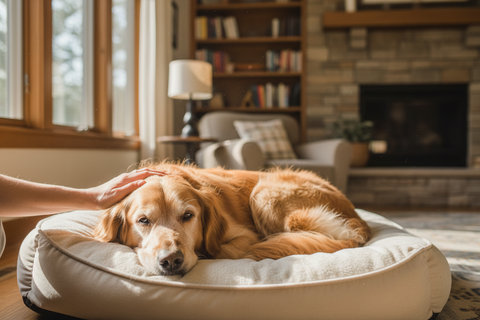
That does not mean your dog needs to sleep in your bed. It might mean sleeping in the same room, in a soft quiet spot where they can see you as they fall asleep, or when they wake up at night.
Odors and chemicals near their bed
A dog's sense of smell is far more sensitive than ours. Think about the detergent and floral dryer sheets that make their bed smell less like a dog, which they probably love, and more like something only a human would enjoy. Those smells can significantly disrupt a dog's sleep.
Noise and vibration
Like their sense of smell, our dogs' hearing is far stronger than ours. That is instinct. It kept their ancestors alive.
Subtle vibrations from a washing machine, an HVAC unit, or nearby traffic may not wake you, but they can prevent your dog from fully settling into sleep.
Why this adds up
Over time, disrupted sleep adds up.
Protect their sleep, and you will be well on your way to enjoying more healthy, happy years with your best friend.
★★★★★
“No more poor sleeping, pacing or bumping into walls. After a little more than a month, our little ball of fluff is more playful and alert than we have seen in a long time!”
Zeze, 6 years old. Individual results vary.
>>> https://FureverActive.com/pages/neurochew-longevity
Making a big difference, one paw at a time.
Frequently asked questions
Should my dog sleep in my bedroom?
Most dogs settle better in the same room as their people. The bed itself is optional. A soft spot on the floor where they can see you works just as well.
Why does my dog pace at night?
Common causes are discomfort, a full bladder, noise or vibration in the house, and cognitive change in older dogs. Mention new night pacing to your veterinarian.
What bedding is best for an older dog?
Supportive foam, washed in unscented detergent, placed away from drafts and appliances. Older joints need cushioning, and sensitive noses need it to smell like nothing much.
How much do dogs sleep?
Adult dogs commonly sleep 12 to 14 hours a day, and seniors more. What matters is the quality and how settled they are, not only the hours.
Can poor sleep affect my dog's memory?
Sleep is when the body recovers. Ongoing disrupted sleep is associated with more anxiety and less clarity, which is why sleep is worth protecting as dogs age.
Share this article
Email this articleGet practical dog wellness tips by email
Occasional, useful guidance on keeping your dog healthy and happy. Unsubscribe anytime.
No spam. We respect your inbox.

Support your dog's brain health with NeuroChew
NeuroChew is our daily soft chew for dogs, made fresh in the USA. See the ingredients and how it fits into a healthy daily routine.
Learn more about NeuroChew