Dog Brain Health
Do Calming Treats Work for Dogs? An Honest Look


Do calming treats work for dogs? The honest answer is that they can help a little for some dogs, but they are not a guaranteed fix, and the evidence behind most calming ingredients is still limited or early. Dog owners should maintain realistic expectations when trying calming aids, as individual responses vary and a supplement that helps one dog may not work for another. Dietary supplements and calming aids may be most effective when paired with structured behavior modification training rather than used as a single quick-fix solution. If your dog's anxiety is frequent, intense, or disrupting daily life, that is a sign for a veterinarian or veterinary behaviorist to take the lead, not a chew.
You searched do calming treats work for dogs, and that alone tells us something. Maybe your dog is anxious, restless, or hard to settle, and you want to know if a bag of chews from the pet store is actually worth trying. This guide gives it to you straight: what the evidence really supports, which ingredients have any research behind them at all, why results differ so much from dog to dog, a realistic sense of timing, and the point where a veterinarian or behaviorist should take over instead of another product.
Related: does cosequin really work for dogs
So, Do Calming Treats Actually Work for Dogs?

Dog owners should maintain realistic expectations when trying calming aids, as individual responses vary and a supplement that helps one dog may not work for another. Some dogs settle down after a chew or two, others show no change at all, and that gap says more about biology than about any single product. Before buying anything, run each product through the same short checklist:
- Check whether the label names a specific active ingredient and its dose, not just a vague blend.
- Look for that ingredient among those actually studied in dogs, not only in humans or other species.
- Weigh how strong the evidence really is, since early and limited research is common in this category.
- Talk to your veterinarian before adding anything new, especially if your dog already takes other medication.
- Watch your own dog's actual response instead of assuming the label's promise will hold.
None of these steps guarantees an outcome, but together they turn a guess into an informed decision.
Source: VCA Animal Hospitals and Veterinary Evidence
Why Calming Aids Work Best as Part of a Bigger Plan

Dietary supplements and calming aids may be most effective when paired with structured behavior modification training rather than used as a single quick-fix solution. That single sentence explains why so many owners feel let down: they expect a chew to do the whole job by itself. A calming aid is best treated as one supporting piece next to consistent training, not a replacement for it.
If your dog's anxiety shows up often, feels intense, or is starting to disrupt daily life, that is the moment to ask your veterinarian about a referral to a veterinary behaviorist who can build a structured plan alongside any calming aid. Professional guidance does not replace the aid, it gives the aid an actual plan to work inside.
Source: VCA Animal Hospitals
L-Theanine: A Closer Look at the Evidence
L-theanine, an amino acid found in some calming aids, may help support relaxation and reduce environmental stress or fear-related behaviors in dogs. Always consult a veterinarian before starting your dog on L-theanine to discuss whether it is appropriate for their individual behavior plan. It shows up in some calming chews and not others, so check the label rather than assuming every product contains it.
Because it is a fairly common ingredient in this category, comparing labels side by side is often the fastest way to tell one product from another.
Source: VCA Animal Hospitals
Alpha-Casozepine: A Promising but Understudied Ingredient
Research suggests that alpha-casozepine, a milk-derived bioactive peptide, may help support calmer behavior in dogs experiencing anxiety. While some evidence supports the use of alpha-casozepine for anxiety, scientific findings are still emerging and individual responses among dogs can vary widely. As with many ingredients in this category, a small evidence base does not mean no effect, only that confidence should stay low until more research exists.
Related: vetriscience composure calming chews for dogs
If you see alpha-casozepine on a label, treat it as one reasonable option to try, not a fix you can count on.
Source: Veterinary Evidence
Pheromone Diffusers and Collars: Calming Without a Chew
Veterinarians may suggest synthetic pheromone products, which mimic natural appeasing signals, to help create a reassuring environment for stressed or anxious dogs. These products work through scent rather than ingestion, which makes them a reasonable option for dogs who resist chews or have food sensitivities. They are typically plugged in or worn rather than swallowed, and many owners add them alongside the training piece described above.
Ask your veterinarian whether a pheromone product makes sense alongside whatever else is already part of your dog's routine.
Source: VCA Animal Hospitals
Pressure Vests and Wraps: Do They Help?
Pressure vests are environmental tools that may help reduce stress in some anxious dogs, though scientific evidence regarding their benefits remains limited and highly variable. The product wraps snugly around a dog's torso, and results are inconsistent from dog to dog. Because the evidence base is thin, treat a pressure vest as a low-risk experiment rather than an expected solution.
If it does not seem to help within a reasonable trial period, there is no harm in setting it aside for a different approach.
Source: Veterinary Evidence
How Long Do Calming Treats Take to Work?
Because the onset of action for calming ingredients can vary, pet owners should consult their veterinarian to establish realistic expectations for how long a supplement may take to work. There is no single number that applies to every dog or every ingredient, and claims of a fixed onset window should be treated with real skepticism. A short list of questions can make that conversation more useful:
- How long should we reasonably wait before deciding this is not working?
- Are there early signs that suggest the product is not a good fit?
- Would a different ingredient or a non-chew option be more appropriate here?
Bringing a short list like this to an appointment turns a vague hope into an actual plan you can evaluate.
Related: 4health calming aid supplement bars for dogs
Source: VCA Animal Hospitals
Our answer to the calming-aid question

From our family ranch, full disclosure: this one is ours
Since you're weighing calming options anyway, full disclosure: NeuroChew is ours, and it plays one specific position. It isn't a sedative, and the training and routines above still do the behavior work. What it covers is the daily foundation: a veterinarian-approved soft chew with phosphatidylserine, Norwegian salmon oil, and beet root with ginger that supports normal brain function and healthy circulation while you work the rest of the plan.
- ✓ 60-day guarantee: not thrilled? Even the empty bottle gets a full refund
- ✓ Free shipping on every order
- ✓ Multi-bottle packs save up to 40%
"I support NeuroChew because it's the first dog chew that supports both brain function and healthy circulation!" Dr. Ruth Roberts, DVM, CVFT
See What's Inside NeuroChew →Daily support, not medicine. It fits alongside your vet's plan, never in place of it.
Frequently asked questions
Do vets recommend calming chews?
Some veterinarians may suggest complementary options such as synthetic pheromone products as one piece of a plan, and dietary supplements or calming aids tend to work best when paired with structured behavior modification training rather than used alone. Check with your own veterinarian before adding anything new.
How effective are dog calming treats?
Evidence varies by ingredient and is often early or limited, and individual dogs respond differently, so a supplement that helps one dog may not work for another. Dog owners should maintain realistic expectations rather than expecting a guaranteed result.
What do vets recommend for calming dogs?
Veterinarians may point to structured behavior modification training as the core of any plan, with complementary options like synthetic pheromone products sometimes added alongside it. Because every dog is different, the right combination is best worked out with your own veterinarian.
How long do calming treats take to kick in for dogs?
There is no fixed timeline, since the onset of action for calming ingredients can vary by dog and by ingredient. Ask your veterinarian to help set realistic expectations for how long a particular supplement may reasonably take to work.
Which calming ingredients actually have research behind them?
L-theanine and alpha-casozepine are two of the more studied calming ingredients, though the evidence for each is still limited. L-theanine may help support relaxation and reduce environmental stress or fear-related behaviors in some dogs, and alpha-casozepine may help support calmer behavior in dogs experiencing anxiety, but scientific findings for both ingredients are still emerging and individual responses vary widely.
Calming treats are not a myth, but they are not a shortcut either. Some ingredients like L-theanine and alpha-casozepine have real, if limited, research behind them, and non-chew options like pheromone products and pressure vests exist for dogs who need something different. Dog owners should maintain realistic expectations when trying calming aids, as individual responses vary and a supplement that helps one dog may not work for another, and the aids that do help tend to work best alongside structured training rather than in place of it. If your dog's anxiety is severe or is not improving, involve your veterinarian or a veterinary behaviorist rather than reaching for a different bag of chews.
Get practical dog wellness tips by email
Occasional, useful guidance on keeping your dog healthy and happy. Unsubscribe anytime.
No spam. We respect your inbox.
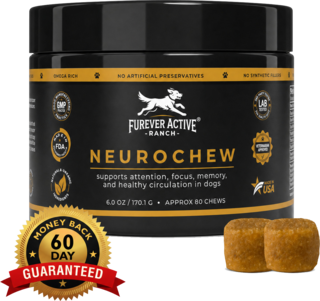
Support your dog's brain health with NeuroChew
NeuroChew is our daily soft chew for dogs, made fresh in the USA. See the ingredients and how it fits into a healthy daily routine.
Learn more about NeuroChew