Dog Brain Health
Dog Anxiety in Crate: Why It Happens and How to Help


For some dogs with separation anxiety, crate confinement can trigger intense distress, potentially leading to escape attempts and self-injury. Helping a dog overcome that panic usually requires gradual step-by-step training that builds tolerance for being left alone, alongside a crate set up as a secure safe haven. For severe anxiety, combining behavioral conditioning with guidance from a veterinarian or veterinary behaviorist may offer the best results.
You latch the crate door, and within a minute there is drool on the bars, frantic scratching, and a howl that follows you down the hallway. If that scene feels familiar, you have probably typed dog anxiety in crate into a search bar more than once and gotten twenty conflicting answers back. This guide keeps it honest: why crates set off panic in some dogs, how to tell whether the crate or the alone-time is the real trigger, a gradual retraining plan with concrete steps, what tends to backfire, and the point where a veterinarian or veterinary behaviorist should take over.
Related: can i give my dog benadryl for anxiety
Is It the Crate, or Being Left Alone?

Start with one question before you change anything about the box itself. For some dogs with separation anxiety, crate confinement can trigger intense distress, potentially leading to escape attempts and self-injury. So run a simple test on a day off: leave your dog loose in a dog-proofed room, step out, and watch on a camera.
If he still howls, claws at the exit door, or has accidents with no crate in sight, being alone is the likely trigger, and the crate is just where the panic gets loudest. If he relaxes when loose but falls apart only behind a closed crate door, the confinement itself is what needs work. The two patterns call for different plans, and pushing more crate time on a dog in the first group risks exactly the escape attempts and injuries the behaviorists warn about.
Source: ASPCA and VCA Animal Hospitals
The Quiet Signals That Come Before the Meltdown

Full-blown panic rarely shows up without a warning. Monitoring your dog for subtle physical indicators of stress, like pacing, excessive panting, or lip licking, can help you intervene before their anxiety escalates. Watch for those three around the crate specifically: in the minutes before you normally crate him, while the door is still open, and in the first moments after it closes.
Keep a short daily log of when the signals start and how long he takes to settle afterward. A week of notes can show you which moment of the routine sparks the reaction, and later it will tell you whether the plan you started is actually moving things week over week.
Source: Cornell Riney Canine Health Center
A Chewed Door Frame Is Panic, Not Payback
Owners often come home to wreckage and read it as defiance. When a dog damages door frames, window sills, or barriers during an owner's absence, this destruction is often driven by panic rather than spite or a lack of house training. Notice where the damage sits: scratches and bite marks concentrated at exits and barriers are the mark of a dog trying to get back to you, not a dog getting even.
Read the wreckage as information about how intense the fear is, and let it push you toward the gradual plan below rather than toward a sturdier crate, because tougher containment does not change how he feels about being contained.
Source: ASPCA
A Gradual Crate Retraining Plan You Can Start Today
Helping a dog overcome separation anxiety usually requires gradual step-by-step training to build their tolerance for being left alone over time. The crate version keeps every step below the point of panic, and it looks like this:
Related: apple cider vinegar for dogs
- Leave the door open for a few days and let the crate go back to being furniture, with meals and quiet moments happening near it, then inside it.
- Close the door for seconds while you sit right there, and open it before any fussing starts; repeat until a closed door is boring.
- Grow the closed-door time in small steps, seconds to minutes, and if pacing, panting, or lip licking creep in, drop back to the last step he handled easily.
- Add distance before you add much more time: step out of the room, return low-key, and let the pattern teach him that the door always opens again.
- Keep sessions short and end on an easy success; two or three relaxed repetitions a day beat one long standoff.
Built this way, tolerance holds because your dog sets the pace. Think in weeks rather than days, expect a few slides backward, and read each one as information about step size, not as failure.
Real life does not pause while you retrain. For absences you cannot avoid, line up a sitter, a trusted neighbor, daycare, or a dog-proofed room, so the crate is never paired with panic mid-plan. Every rehearsal that stays calm moves you forward, and every forced panic sets the clock back.
Source: ASPCA and Cornell Riney Canine Health Center
Rehearse Your Exits Until They're Boring
Keys, shoes, coat, hand on the doorknob: your dog knows your leaving routine better than you do. Conditioning your dog to pre-departure cues (such as picking up keys without leaving) may help reduce initial distress and anticipation of departure. In practice that means running the routine and going nowhere: pick up the keys and sit back down, put on shoes to make coffee, touch the doorknob and walk away, several times a day until the cues stop meaning anything.
Once they are boring, add brief mock departures, out the door, count ten, back in calm and unceremonious, and stretch the gap only as fast as your dog stays relaxed. You are aiming for a dog who hears the keys and does not bother lifting his head.
Source: VCA Animal Hospitals
Set Up the Crate as a Safe Haven
Where the crate sits and what surrounds it does real work. Setting up a secure 'safe haven' with white noise or calming music can help reduce a dog's reaction to loud external triggers like thunder or fireworks. The same thinking is worth trying for everyday crate time: put the crate where the household actually lives instead of an empty back room, keep what is inside familiar, and give the space a steady soundtrack so hallway footsteps and street noise stop landing as alarms.
One caution on expectations, though. The veterinary behavior literature is blunt that no single tool works for every dog every time, so consider the setup one layer of the plan, not the whole plan.
Source: Today's Veterinary Practice
What Makes Crate Anxiety Worse
Some of the most common advice quietly digs the hole deeper. While mental enrichment and physical activity are excellent for general well-being, they typically need to be paired with targeted behavior modification to address severe separation anxiety. 'A tired dog is a good dog' is the classic example: keep the walks and the enrichment, but do not expect them to do the retraining on their own.
Related: do calming treats work for dogs
Do not force a frightened dog into the crate and wait out the screaming either; you read earlier what confinement can push an already panicked dog to do.
Source: ASPCA and VCA Animal Hospitals
No Two Dogs Panic for the Same Reason
The plan above is a template, not a prescription. Because canine anxiety manifests differently in each animal, behavioral strategies should be tailored specifically to your dog's unique needs and triggers. So borrow the structure and let your own dog set the details: which step he stalls on, which cue lights him up, which reward he actually cares about, how long a session he can take before the quality drops.
The notes you have been keeping are the tailoring tool here. A plan adjusted to the dog in front of you will quietly outperform a perfect plan written for somebody else's.
Source: Cornell Riney Canine Health Center
When to Call Your Veterinarian or a Behaviorist
For dogs experiencing severe anxiety, combining behavioral conditioning with guidance and support from a veterinarian or veterinary behaviorist may offer the best results. Make that call sooner rather than later if your dog is hurting himself on the crate, if the panic shows up during every absence, or if several weeks on the gradual plan have not moved anything. A sudden meltdown in a dog who used to crate calmly also earns a visit on its own, so your veterinarian can look for anything physical before you assume it is behavioral.
And board-certified behaviorists are direct about one thing worth hearing early: medication alone does not carry lasting change, the retraining program does, so professional help extends the plan rather than replacing it.
Source: VCA Animal Hospitals and Cornell Riney Canine Health Center
Where Calming Support Honestly Fits
It is tempting to want something you could just add to the food bowl. Research into the gut-brain axis suggests that communication between a dog's digestive tract and brain may play a role in how they perceive and react to stress. While research is emerging on the link between a dog's gut microbiome and behavioral issues like anxiety, scientific understanding is still developing and individual results vary.
Some probiotic strains are under investigation for their potential to help support behavioral balance, but you should speak with your veterinarian to find an appropriate plan for your dog. That is the honest ceiling of the evidence right now: an early and interesting line of research, early research, and nothing that replaces the training in the sections above.
Related: what can i give my dog for anxiety
Source: Veterinary Medicine International (Wiley, formerly Hindawi), via NCBI/PMC and Peer-reviewed article via PubMed Central and Animals (MDPI)
Our answer to the calming-aid question

From our family ranch, full disclosure: this one is ours
Since you're weighing calming options anyway, full disclosure: NeuroChew is ours, and it plays one specific position. It isn't a sedative, and the training and routines above still do the behavior work. What it covers is the daily foundation: a veterinarian-approved soft chew with phosphatidylserine, Norwegian salmon oil, and beet root with ginger that supports normal brain function and healthy circulation while you work the rest of the plan.
- ✓ 60-day guarantee: not thrilled? Even the empty bottle gets a full refund
- ✓ Free shipping on every order
- ✓ Multi-bottle packs save up to 40%
"I support NeuroChew because it's the first dog chew that supports both brain function and healthy circulation!" Dr. Ruth Roberts, DVM, CVFT
See What's Inside NeuroChew →Daily support, not medicine. It fits alongside your vet's plan, never in place of it.
Frequently asked questions
How can I reduce my dog's anxiety in his crate?
Work in two directions at once. Make the crate a secure safe haven, in a settled spot with white noise or calming music to soften outside triggers, and rebuild tolerance with gradual step-by-step training so a closing door stops predicting panic. If the anxiety is severe, involve your veterinarian early rather than as a last resort.
How can I stop my dog from freaking out when I leave?
Start by defusing your departure cues: pick up keys, put on shoes, touch the door, and go nowhere, repeating until the routine stops predicting anything. Conditioning those pre-departure cues may lower the dread that builds before you leave, and from there you can layer in brief practice absences that grow only as fast as your dog stays relaxed.
How do I help a dog with extreme anxiety?
Severe cases are where professionals earn their keep. For a dog in that state, behavior work guided by a veterinarian or veterinary behaviorist may offer the best path, and the plan should be tailored to your dog's specific triggers rather than pulled from a generic checklist.
How do you fix dog separation anxiety?
There is no overnight fix. What helps is gradual, step-by-step training that builds a dog's tolerance for being left alone over time, and enrichment or exercise alone typically is not enough for severe cases, which call for targeted behavior modification and professional guidance.
Crate panic is not stubbornness, and it does not answer to a firmer no. Sort out whether the crate or the alone-time is the trigger, keep every training step small enough that your dog never tips into full alarm, rehearse your exits until they are dull, set the crate up as a genuinely safe spot, and bring in a veterinarian or veterinary behaviorist when the fear is intense or progress stalls. Weeks of small wins beat days of forcing it, and a dog who learns that the closed door always opens again has learned the thing that matters most.
Get practical dog wellness tips by email
Occasional, useful guidance on keeping your dog healthy and happy. Unsubscribe anytime.
No spam. We respect your inbox.
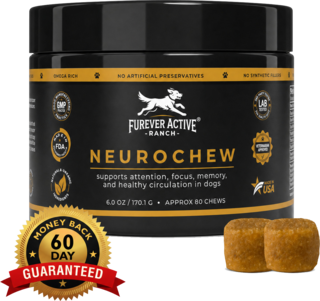
Support your dog's brain health with NeuroChew
NeuroChew is our daily soft chew for dogs, made fresh in the USA. See the ingredients and how it fits into a healthy daily routine.
Learn more about NeuroChew