Dog Brain Health
Calming Spray for Dogs: Surface Cue, Not Sedation


A calming spray for dogs is usually a short-window surface mist for bedding, crates, cars, or bandanas, not a sedative sprayed onto the dog. Synthetic dog-appeasing pheromone sprays may help with situational stress when used as part of a wider plan, and fragrance-only mists are a different chemistry class.
You are holding a bottle that promises a calmer car ride, and you want to know whether a calming spray for dogs is a real environmental cue or just a pleasant mist. We make NeuroChew, a daily brain-health soft chew, not a spray.
Related: 4health calming aid supplement bars for dogs
What we bring to this aisle is mechanism first: dog-appeasing pheromone analog versus plant-extract fragrance, then wait-before-reentry rules, reapply windows, and honest limits when the case is bigger than a suitcase day.
AT A GLANCE
The pick: Our pick is NeuroChew, our own daily brain-health chew, held to the standard this guide teaches.
Reason one: Built for daily brain support, not sedation.
Reason two: Veterinarian-approved, with Dr. Ruth Roberts, DVM, CVFT as the named endorser.
Reason three: A 60-day guarantee, refunded even on an empty bottle.
Skip it if: Your dog has new, sudden, or severe symptoms, is pregnant, nursing, or a puppy, is on medication, or is managing an existing condition without your veterinarian's input.
What a DAP spray is built to do

A bottle on the carrier is not a pill. Synthetic dog appeasing pheromone (DAP) sprays may help manage stress-related behaviors associated with travel, veterinary visits, storms, fireworks, or boarding.
That is short-window environmental signaling, not sedation.
Spray form fits surfaces and events, not continuous all-day wear like a collar. Fragrance or plant-extract mists may sit on the same shelf; they are not interchangeable with DAP chemistry just because both say calm on the front panel.
ADAPTIL Travel and ThunderEase spray are DAP-class tools for objects and short events.
Nature's Miracle-style plant-extract sprays are a different product class.
Source: VCA Animal Hospitals
Bottom line: DAP sprays are short-event surface cues for situational stress, not drugs.
Where to spray and where never to spray
Surface discipline is the whole product. Calming pheromone sprays should be applied directly to bedding, crates, car interiors, or bandanas, and should never be sprayed directly on the dog.
Manufacturer rules for ADAPTIL Travel and ThunderEase land in the same place: spray where the dog sits or sleeps, not onto fur or into a face.
Related: best calming treats for dogs vet-recommended
Never spray a carrier while the dog is inside. ThunderEase also allows application to objects such as a wrap patch when that is part of the product system.
If the bottle reads like a perfume for people, re-check whether you bought a fragrance mist instead of a DAP product.
Bottom line: spray objects and fabrics, never the dog.
Wait time before the dog re-enters
Wet alcohol carrier is not ready air. After applying a pheromone spray to bedding or a crate, you should allow 10 to 15 minutes for the spray to dry and the alcohol carrier to fully evaporate before letting your dog near it.
ADAPTIL Travel education commonly lands near a 10-minute wait before reentry and a reapply window of about 4 to 5 hours during car trips.
Follow the card on the bottle you actually bought. An expired half-empty bottle, a face mist, or a rushed reentry is not the product the manuals describe.
Bottom line: dry time first, then the dog, then the reapply clock.
Sprays work best inside a behavior plan

A mist does not teach a skill. Complementary therapies, including pheromones and nutraceuticals, are typically most effective when used as part of an overall behavior modification program rather than as a sole solution.
Desensitization, counterconditioning, and trigger management still do the learning.
Use the spray as background support for a known short stressor while the dog practices. If the only change you make is the brand on the bottle, expect limited movement.
Related: calming aid for dogs
Bottom line: pheromones and nutraceuticals are adjuncts inside a plan, not the plan.
L-theanine is chew-aisle context, not spray proof
Supplement tabs bleed into spray shopping. L-theanine, an amino acid derived from green tea, may help promote relaxation and support dogs showing signs of environmental anxiety or fear.
It shows up in many calming chews, which is why spray shoppers hear about it in the same browse path.
NeuroChew does not list L-theanine. Keep the jobs separate: a spray is short-window surface signaling, and an amino-acid chew is an ingestible with its own label.
Run the printed-amount test on any bag before you treat ingredient marketing as a reason to skip training.
Bottom line: L-theanine is chew-aisle context, not a spray claim.
Alpha-casozepine and its developing evidence
Milk-protein marketing can ride next to spray listings. The scientific evidence regarding whether alpha-casozepine is effective at reducing anxiety in dogs is still developing, and individual dog responses can vary.
The ingredient is not on the NeuroChew label.
Do not let a surface mist borrow credibility from a milk-protein trial it does not contain. If a bag leans hard on milk-protein language, ask for the printed amount and keep the product inside a veterinary-guided plan.
Source: Veterinary Evidence
Bottom line: alpha-casozepine evidence is still developing and is not spray proof.
Pressure vests as a related, limited-evidence tool
Some dogs want steady contact; others fight the gear. Current veterinary evidence on whether pressure vests are beneficial for reducing stress in anxious and fearful dogs is limited, and individual responses vary.
Related: do calming treats work for dogs
A vest finding does not prove a pheromone spray works, and a spray trial does not prove a vest will.
Use either tool as one reversible experiment inside a wider plan. Fit, duration, cooling, and whether the dog can still move matter more than brand embroidery.
Bottom line: pressure-vest evidence is limited; treat it as a reversible test.
Why there is no single most effective calming aid
Owners want a podium product. Because individual responses to calming aids (such as pheromones, dietary supplements, or pressure garments) vary significantly from dog to dog, there is no single most effective option, and clinical findings are still emerging.
Our house take sorts tools by job and by your dog's log rather than by packaging: teaching and management do the heavy lift, short-event surface tools support the moment, nutrition is optional when appropriate, and prescription care is a clinic call when your veterinarian says the case needs it.
Call the clinic first for sudden aggression, escape injury risk, new severe panic, or pain signs. NeuroChew is not a spray alternative.
It is a daily brain-health soft chew with printed amounts and a different job from short-window pheromone delivery.
Source: Veterinary Evidence and VCA Animal Hospitals
Bottom line: match tools to job and response, not to a universal winner list.
So, where does NeuroChew fit into all this?
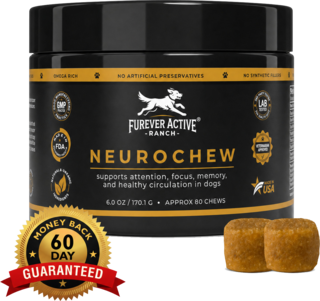
Full transparency: NeuroChew is ours. It's a veterinarian-approved daily soft chew that supports normal brain function and healthy circulation in dogs.
It's daily support, not medicine, designed to fit alongside your vet's plan rather than replace it. Dr.
Related: adaptil calming collar for dogs
Ruth Roberts, DVM, CVFT, puts it this way: "I support NeuroChew because it's the first dog chew that supports both brain function and healthy circulation!" If the signs above sound familiar, a daily brain-support routine is one of the simplest places to start.
Frequently asked questions
Does calming spray actually work for dogs?
DAP-class sprays may help with situational stress for some dogs when used on surfaces as directed. Results vary, fragrance-only mists are a different chemistry class, and no spray replaces a behavior plan or veterinary care.
What is the most effective calming aid for dogs?
There is no single most effective option across pheromones, supplements, and pressure garments. Individual responses vary, and clinical findings are still emerging, so match tools to job and your dog's written response.
What do vets recommend for calming dogs?
Many clinicians favor multimodal care: behavior modification as the core, complementary tools such as pheromones as adjuncts, and prescription options when the case needs them. Ask your veterinarian before stacking products.
Where to spray dog calming spray?
Apply to bedding, crates, car interiors, bandanas, or other objects named on the label. Never spray directly on the dog, and wait about 10 to 15 minutes for drying and alcohol evaporation before the dog re-enters the space.
How long does one spray application last?
DAP travel sprays commonly reapply about every 4 to 5 hours after correct use. Follow the exact bottle you bought, because fragrance mists and DAP products are not the same class.
Is NeuroChew a spray alternative?
No. NeuroChew is a daily brain-health soft chew with printed active amounts. It is not a surface pheromone product and does not replace training or veterinary care.
Buy a DAP-class spray for short situational surface support when the label names the mechanism, forbids spraying the dog, and states a wait-and-reapply window you can follow. Pair it with behavior work.
Do not treat a mist as a phobia cure. NeuroChew is a different tool class: a daily brain-health soft chew with printed amounts, not a surface pheromone product.
References
- Behavior Counseling - Complementary Medication, VCA Animal Hospitals. https://vcahospitals.com/know-your-pet/behavior-counseling---medication-complementary
- L-Theanine, VCA Animal Hospitals. https://vcahospitals.com/know-your-pet/l-theanine
- Pheromones, VCA Animal Hospitals. https://vcahospitals.com/know-your-pet/pheromones
- Is Alpha-casozepine Efficacious at Reducing Anxiety in Dogs?, Veterinary Evidence. https://veterinaryevidence.org/index.php/ve/article/view/67
- Are Pressure Vests Beneficial at Reducing Stress in Anxious and Fearful Dogs?, Veterinary Evidence. https://veterinaryevidence.org/index.php/ve/article/view/152
As of July 2026
Get practical dog wellness tips by email
Occasional, useful guidance on keeping your dog healthy and happy. Unsubscribe anytime.
No spam. We respect your inbox.
Support your dog's brain health with NeuroChew
NeuroChew is our daily soft chew for dogs, made fresh in the USA. See the ingredients and how it fits into a healthy daily routine.
Learn more about NeuroChew