Dog Brain Health
What Can I Give My Dog for Anxiety? Safe Support Options


Creating a dark, quiet 'safe haven' or utilizing environmental management strategies may help an anxious dog cope with stressful events, though owners should consult a veterinarian for a comprehensive plan.
When your dog is struggling with fear or stress, finding a safe and effective way to help them is a top priority. While the market is filled with quick fixes, managing canine distress requires a thoughtful, science-backed approach. Understanding the connection between your dog's environment, their gut health, and their nervous system can help you make informed decisions.
Related: can i give my dog benadryl for anxiety
How can I change my dog's environment to help them feel safe?
Creating a dark, quiet 'safe haven' or utilizing environmental management strategies may help an anxious dog cope with stressful events, though owners should consult a veterinarian for a comprehensive plan.
Source: Cornell Riney Canine Health Center and Today's Veterinary Practice
What signs show that my dog is feeling anxious?

Dogs communicate their discomfort through subtle body language long before they begin to whine or bark. Owners can observe physical and behavioral cues, including panting, pacing, yawning, hiding, or excessive vigilance, to identify when a dog is experiencing anxiety or distress. Some of these signs, like sudden yawning when they are not tired or scanning the room constantly, are easily missed.
Tracking these behaviors in a daily diary can help pinpoint specific triggers, such as loud noises or changes in your household schedule. Recognizing these early warning signals allows you to intervene before your dog becomes completely overwhelmed by their fear. Correcting, scolding, or punishing a dog for displaying fear- or anxiety-related behaviors (such as whining or hiding) is counterproductive and may increase their anxiety.
Related: anxiety supplements for dogs
Source: Cornell Riney Canine Health Center and Today's Veterinary Practice
Is there a link between my dog's gut health and their behavior?

Emerging studies suggest that the gut-brain axis plays a role in canine behavior, indicating that gut microbiota composition may be linked to anxiety and aggression scores in companion dogs. This biological pathway involves complex communication between the digestive system, the immune system, and the central nervous system. Key chemical messengers, including short-chain fatty acids and neurotransmitters like serotonin, dopamine, and GABA, help transmit signals along this axis.
When the balance of gut bacteria is altered, it can influence how the stress axis responds to unsettling events. While researchers have observed specific bacterial groups, such as the genus Blautia, associated with higher anxiety scores, these findings are correlational. They do not prove that gut bacteria directly cause anxious behavior.
Certain probiotic strains, such as specific Lactiplantibacillus plantarum strains, may support balanced canine behavior and help manage anxiety-related scores under veterinary guidance. Probiotics are live, beneficial microorganisms that can help replenish a dog's gut flora after it has been disrupted by stressors, dietary changes, or antibiotic use. These supplements are typically given orally, often mixed directly into your dog's daily meals.
Related: what causes anxiety in dogs
It is important to remember that these options are not designed to diagnose, treat, or cure behavioral disorders. Because not all commercial brands meet their label claims, finding a high-quality option requires careful selection.
Source: Peer-reviewed article via PubMed Central and Veterinary Medicine International (Wiley, formerly Hindawi), via NCBI/PMC and Animals (MDPI) and VCA Animal Hospitals
What should I do before starting an over-the-counter calming product?
Before giving a dog any over-the-counter calming remedies, supplements, or probiotics, owners should consult a veterinarian to discuss safe options and correct usage tailored to their pet. If a dog's anxiety is severe, persistent, or interferes with their quality of life, owners should seek professional evaluation from a veterinarian or veterinary behaviorist rather than relying solely on home remedies.
Source: VCA Animal Hospitals and Today's Veterinary Practice and Cornell Riney Canine Health Center
Should I expect a probiotic to completely solve my dog's anxiety?
While research into the canine gut-brain axis is a promising field, clinical evidence regarding microbiome-targeted support for behavioral issues is still emerging, and individual responses to dietary changes or probiotics will vary.
Related: how to calm dog anxiety naturally
Source: Animals (MDPI) and Veterinary Medicine International (Wiley, formerly Hindawi), via NCBI/PMC
Our answer to the calming-aid question

From our family ranch, full disclosure: this one is ours
Since you're weighing calming options anyway, full disclosure: NeuroChew is ours, and it plays one specific position. It isn't a sedative, and the training and routines above still do the behavior work. What it covers is the daily foundation: a veterinarian-approved soft chew with phosphatidylserine, Norwegian salmon oil, and beet root with ginger that supports normal brain function and healthy circulation while you work the rest of the plan.
- ✓ 60-day guarantee: not thrilled? Even the empty bottle gets a full refund
- ✓ Free shipping on every order
- ✓ Multi-bottle packs save up to 40%
"I support NeuroChew because it's the first dog chew that supports both brain function and healthy circulation!" Dr. Ruth Roberts, DVM, CVFT
See What's Inside NeuroChew →Daily support, not medicine. It fits alongside your vet's plan, never in place of it.
Frequently asked questions
What home remedy can I give my dog for anxiety?
At-home support starts with creating a dark, quiet safe haven where your dog can escape stressful events. While you might consider over-the-counter calming supplements or probiotics, you should always consult a veterinarian first to ensure correct usage. If your dog's anxiety is severe, home remedies alone are rarely enough, and professional evaluation is recommended.
What calms a dog down with anxiety?
Environmental management, such as a predictable daily routine and a quiet retreat, can help calm a stressed dog. It is equally important to avoid scolding or punishing them for showing fear, as this will only increase their distress. For persistent or severe anxiety, consulting a professional behaviorist or veterinarian is the safest path forward.
Navigating your dog's stress can be challenging, but a patient and structured approach will help them feel more secure. Working closely with your veterinary team is the best way to develop a plan that addresses their unique physical and behavioral needs. With time and professional guidance, you can build a calmer, happier environment for your dog.
Get practical dog wellness tips by email
Occasional, useful guidance on keeping your dog healthy and happy. Unsubscribe anytime.
No spam. We respect your inbox.
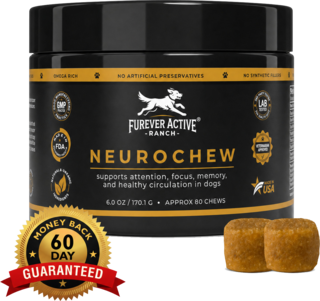
Support your dog's brain health with NeuroChew
NeuroChew is our daily soft chew for dogs, made fresh in the USA. See the ingredients and how it fits into a healthy daily routine.
Learn more about NeuroChew