Dog Brain Health
Best Calming Treats for Dogs Vet-Recommended


The best calming treats for dogs vet-recommended are adjuncts a clinic can place inside training and medical rule-outs, with every active milligram printed and no sedative story sold as calm. Rank bags by label honesty and plan fit, not overnight promises. Category literacy lives on the sibling calming-treats explainer.
After thunder, crate panic, or another empty-house meltdown, the aisle looks like a wall of identical calm claims. The roundup sibling job is a ranked decision framework clinics actually use language for, not a fake independent awards list.
Related: calming treats for dogs
The sibling category guide covers what calming treats are and how to read the shelf as a class. Here the work is shortlisting: plan fit, printed amounts, evidence posture, who should skip, and where a daily brain-health chew like NeuroChew sits after the exam and the training plan are already in motion.
AT A GLANCE
The pick: Our pick is NeuroChew, our own daily brain-health chew, held to the standard this guide teaches.
Reason one: Built for daily brain support, not sedation.
Reason two: Veterinarian-approved, with Dr. Ruth Roberts, DVM, CVFT as the named endorser.
Reason three: A 60-day guarantee, refunded even on an empty bottle.
Skip it if: Your dog has new, sudden, or severe symptoms, is pregnant, nursing, or a puppy, is on medication, or is managing an existing condition without your veterinarian's input.
What vet-recommended really means for complementary chews

Veterinarians may recommend complementary therapies like supplements as part of an overall plan to support dogs experiencing mild or situational stress. That sentence is the ceiling for any best-of list in this aisle.
Complementary options stay adjuncts inside behavior counseling.
They are not proof a chew replaces an exam, a safety plan, or follow-up coaching. Run a five-point shortlist before you rank anything: (1) every active amount is printed, (2) the evidence tier is named without upgrade language, (3) the bag does not sell sedation as calm, (4) there is a clear who-should-skip-it line, and (5) training and environment work still stand if night one feels ordinary.
Source: VCA Animal Hospitals
Bottom line: vet-minded means adjunct inside a plan, not aisle awards.
Spot situational stress before you buy
Identifying signs of situational stress in dogs, such as panting, hiding, or excessive vocalization, can help owners determine when to introduce calming strategies or consult a veterinarian. A short list of what you saw, when it started, and what triggers it is more useful than another bag comparison.
If patterns changed suddenly, got worse after dark, or arrive with pain signs, stop ranking pouches and call the clinic first.
Source: PetMD
Bottom line: name the pattern before you rank products.
L-theanine class: score the milligram line
Ingredients like L-theanine may help support relaxation and manage situational fear or environmental stress in dogs without making them drowsy. Treat that wording as aisle context and as an ingredient-mismatch check, not as a claim about our bag.
Names you will see on competitor calm chews include L-theanine stacks shoppers compare in the same aisle.
Our formula does not list L-theanine. When a bag leads with that name, read the milligram line next to it before you trust the front panel.
Competitor milligram tables stay off this page unless two independent sources confirm them.
Bottom line: L-theanine claims still need a printed dose.
L-theanine chemistry without the drowsiness pitch
L-theanine, an amino acid derived from green tea, may help promote a calm state in dogs by supporting natural brain chemistry without causing drowsiness. Absence of drowsiness language is a class clue, not a result guarantee.
Separate non-sedating amino-acid options from melatonin or sedative-herb stacks that sell sleep as calm.
If your veterinarian is aiming for alert settle rather than knockout, that distinction matters on the label.
Bottom line: non-drowsy framing is a class clue, not proof.
Training still outranks a pouch alone
Veterinarians often recommend combining calming aids with active behavior modification training rather than relying on supplements alone. That is the decision rule that keeps a snack from becoming the entire plan.
Calming support can include environmental changes and dog-appeasing pheromone aids, not only ingested chews.
Build the order of operations in writing before you buy: note the trigger, shrink rehearsal of the panic pattern, add non-ingested aids when they fit, then consider a transparent chew only as a small adjunct.
Related: hemp calming chews for dogs
Bottom line: training and environment stay above the pouch.
Alpha-casozepine evidence has a real ceiling
Dietary ingredients like alpha-casozepine may help support dogs with anxiety-related behaviors, though research shows response levels can vary between individual dogs. Evidence reviews force an honest tier: the evidence base is limited, and a diet-level or mixed study does not prove one pulled isolate will behave the same way inside a soft chew.
Our label does not list alpha-casozepine.
When a brand upgrades weak evidence into a certainty story, disqualify the story even if the ingredient name sounds clinical.
Bottom line: milk-peptide names need evidence ceilings, not hero claims.
How to rank while the science is still catching up

Clinical evidence for various calming methods is still developing, and individual responses can vary significantly from one dog to another. That developing umbrella also covers non-supplement tools such as pressure vests.
Prefer printed amounts, named evidence tiers, and a plan that still works if the chew changes little on night one.
If you want something that works overnight, this category is the wrong place to look.
Bottom line: developing evidence means modest ranking language.
Nutritional strategies stay preliminary
Nutritional and dietary strategies for dog stress relief are active areas of research, though scientific evidence for certain ingredients remains preliminary. Use that ceiling when a front panel upgrades early research into certainty.
A fair roundup rewards brands that state the honest limit and rejects promise language the literature does not support.
Detailed class-by-class literacy belongs on the sibling category page; ranking criteria live here.
Source: Animals (Basel) via PubMed Central
Bottom line: preliminary nutrition research is not a crown.
Who should skip L-theanine-style products
The safety of L-theanine supplements has not been fully established in pregnant, nursing, or breeding pets, and their use should be avoided in these animals unless specifically advised by a vet. That skip rule is stronger than any ranking table.
Puppies, multi-medication dogs, and dogs with open medical questions also need clinician input before a new pouch enters the bowl.
Bottom line: pregnancy, nursing, and breeding are skip lanes without vet advice.
When joint discomfort looks like restlessness
If restlessness or behavior changes are linked to joint discomfort, supporting mobility with veterinary-recommended ingredients like glucosamine and chondroitin may help improve overall physical comfort. That is a different aisle job than a situational calm chew.
Do not force a calming-treat ranking onto a pain problem.
Ask your veterinarian whether mobility support, pain management, or a behavior plan is the right first tool.
Source: VCA Animal Hospitals and The Veterinary Journal via PubMed
Bottom line: joint-related restlessness is not a calm-chew ranking problem.
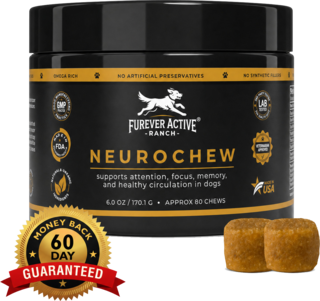
Where NeuroChew sits on this shortlist
Clinical evidence for various calming methods is still developing, and individual responses can vary significantly from one dog to another. That ceiling is why a fair brand page should show its limits in public.
NeuroChew is built for daily brain support, not sedation, and it does not list L-theanine, melatonin, valerian, chamomile, tryptophan, hemp, or CBD.
Related: pupgrade calming chews for dogs
Serving size is 2 soft chews (4g). Printed actives per serving include Phosphatidylserine (PS) 5 mg, Huperzine-A 100 mcg, Alpha Lipoic Acid Powder (ALA) 25 mg, Norwegian Salmon Oil 100 mg, and Vitamin B1 15 mg.
Weight-based dosing runs from 2 soft chews under 30lbs to 7 soft chews at 150-180lbs.
Commercial policy only: 60-day guarantee, even on an empty bottle. Run the printed-amount test on our bag the same way you run it on every other option.
For pure category literacy without ranking language, switch to the sibling calming-treats explainer.
Bottom line: NeuroChew is a transparent daily brain-support option on a vet-minded shortlist, not a sedative treat ranking winner.
Our answer to the calming-aid question
Full transparency: NeuroChew is ours. It's a veterinarian-approved daily soft chew that supports normal brain function and healthy circulation in dogs.
It's daily support, not medicine, designed to fit alongside your vet's plan rather than replace it. Dr.
Ruth Roberts, DVM, CVFT, puts it this way: "I support NeuroChew because it's the first dog chew that supports both brain function and healthy circulation!" If the signs above sound familiar, a daily brain-support routine is one of the simplest places to start.
Frequently asked questions
What calming treats do vets recommend for dogs?
Veterinarians may recommend complementary therapies like supplements as part of an overall plan to support dogs experiencing mild or situational stress. Recommendation means adjunct support inside training and medical judgment, not a universal brand crown.
What are vets best calming treats?
There is no single bag that wins for every dog. Rank by printed amounts, evidence ceilings, plan fit, and safety skips rather than star ratings alone.
What do vets recommend for calming dogs for anxiety?
Veterinarians often recommend combining calming aids with active behavior modification training rather than relying on supplements alone. Severe panic, self-injury, or sudden behavior change still go to the clinic first.
Do calming treats actually work on dogs?
Clinical evidence for various calming methods is still developing, and individual responses can vary significantly from one dog to another. Some dogs appear more settled when a complementary product sits inside a real plan; others do not.
How is this different from the calming treats category guide?
That sibling page defines the category and teaches label literacy. The roundup ranks decision criteria and brand fit for shoppers who already want a vet-minded shortlist.
When should I skip the aisle?
Skip ranking pouches and call the clinic for sudden behavior change, night disorientation, pain signs, pregnancy or nursing without veterinary advice, or severe panic that needs hands-on help.
Rank calming pouches the way a clinic would: complementary only, every milligram printed, evidence ceilings stated, sedation not sold as calm, and a clear skip line. Training and environment still outrank a snack.
For category definitions and ingredient-class literacy, use the sibling calming-treats guide. NeuroChew is a daily brain-support option with a public panel, not a sedative stack and not a stand-alone answer.
References
- What to Know About Calming Aids for Dogs: Supplements, Toys, and More, PetMD. https://www.petmd.com/dog/behavior/dog-calming-products-help-ease-dog-anxiety
- L-Theanine, VCA Animal Hospitals. https://vcahospitals.com/know-your-pet/l-theanine
- Dietary Strategies for Relieving Stress in Pet Dogs and Cats, Animals (Basel) via PubMed Central. https://pmc.ncbi.nlm.nih.gov/articles/PMC10045725/
- Glucosamine Chondroitin Combination, VCA Animal Hospitals. https://vcahospitals.com/know-your-pet/glucosamine
- Randomised double-blind, positive-controlled trial to assess the efficacy of glucosamine/chondroitin sulfate for the treatment of dogs with osteoarthritis, The Veterinary Journal via PubMed. https://pubmed.ncbi.nlm.nih.gov/16647870/
- Behavior Counseling - Complementary Medication, VCA Animal Hospitals. https://vcahospitals.com/know-your-pet/behavior-counseling---medication-complementary
As of July 2026
Get practical dog wellness tips by email
Occasional, useful guidance on keeping your dog healthy and happy. Unsubscribe anytime.
No spam. We respect your inbox.
Support your dog's brain health with NeuroChew
NeuroChew is our daily soft chew for dogs, made fresh in the USA. See the ingredients and how it fits into a healthy daily routine.
Learn more about NeuroChew