Dog Brain Health
Why Is My Dog Restless at Night? Check Pain First


Why is my dog restless at night is often a pain or discomfort question before it is a product-aisle question. Sudden pacing, shifting positions, panting, or whining can mean the body hurts, and the safe next step is a veterinarian, not a random supplement from the pantry.
Most people do not type why is my dog restless at night into a search bar on a calm Tuesday. They type it at 2 a.m. with one hand on a pacing back.
Related: can dogs get anxiety after pneumonia
AT A GLANCE
The pick: Our pick is NeuroChew, our own daily brain-health chew, held to the standard this guide teaches.
Reason one: Built for daily brain support, not sedation.
Reason two: Veterinarian-approved, with Dr. Ruth Roberts, DVM, CVFT as the named endorser.
Reason three: A 60-day guarantee, refunded even on an empty bottle.
Skip it if: Your dog has new, sudden, or severe symptoms, is pregnant, nursing, or a puppy, is on medication, or is managing an existing condition without your veterinarian's input.
Sudden night pacing can be a pain signal

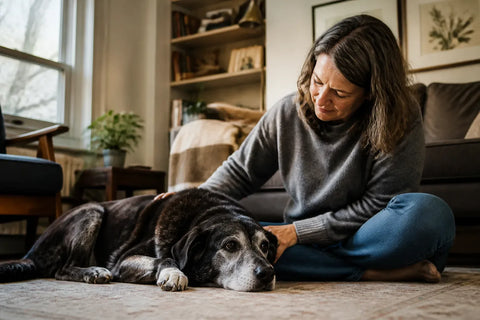
A sudden inability to settle, pacing, or shifting positions at night may be an indicator that a dog is experiencing underlying physical pain or discomfort. Keep the observation narrow and useful: what changed at night, how sudden it felt, and whether the dog can settle at all.
Write those notes before you open any product.
Trouble getting comfortable is a triage clue, not a shopping prompt. That record is more useful than another unplanned experiment.
Source: Cornell Riney Canine Health Center and Merck Veterinary Manual
Bottom line: A sudden inability to settle, pacing, or shifting positions at night may be an indicator that a dog is experiencing underlying physical pain or discomfort.
Panting, whining, and night agitation still deserve a body check
Physical discomfort or pain may cause a dog to show sudden night-time behaviors such as panting, whining, or agitation. Those signs appear in pain-recognition sources because the body often speaks before a neat emotional label does.
Do not decide the cause from a single noisy hour.
Compare tonight with last week and keep the plan medical-first instead of product-first. Restlessness that looks like anxiety can still be discomfort in disguise.
If the pattern is new, prioritize a careful body check over a new bag.
Bottom line: Physical discomfort or pain may cause a dog to show sudden night-time behaviors such as panting, whining, or agitation.
Call the veterinarian when night restlessness is sudden
If your dog is suddenly restless at night, you should consult your veterinarian to help determine the underlying cause and discuss safe, appropriate options. That sentence is the whole point of a careful owner checklist.
A clinic visit keeps the work medically careful and vet-first when signs may indicate discomfort.
Bring your notes and a short video of the pacing if you have one. Ask what to monitor at home and what would count as an urgent recheck.
Waiting for a perfect home explanation is how treatable discomfort gets a marketing nickname.
Related: how much melatonin can i give my dog for anxiety
Bottom line: If your dog is suddenly restless at night, you should consult your veterinarian to help determine the underlying cause and discuss safe, appropriate options.
Do not hand out medications or supplements on your own
Never administer any medications, supplements, or pain relievers to a restless dog without first consulting your veterinarian to ensure safety and proper dosing. Leftover pet meds and pantry products can create new risk when the cause is still unknown.
Safety and dosing are clinical decisions, not midnight improvisation.
If you already gave something, tell the clinic exactly what and when. Holding the experiment is how you avoid stacking problems on top of an unexamined body issue.
Bottom line: Never administer any medications, supplements, or pain relievers to a restless dog without first consulting your veterinarian to ensure safety and proper dosing.
Some dogs hide pain, so quiet nights can still matter
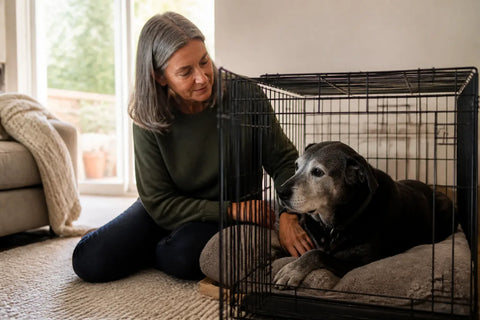
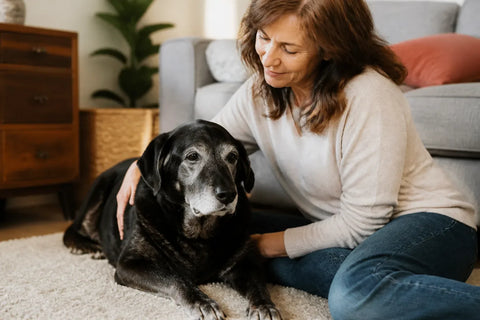
Because every dog expresses discomfort differently, behavioral signs of restlessness can vary widely, and some dogs may not show obvious outward signs of pain. A quieter senior may only shift every few minutes, while another dog makes the first bad hour impossible to ignore.
Absence of a big display is not proof that the body is fine.
Track small changes across several nights before you decide the pattern is ordinary for them now. When in doubt, let a veterinarian interpret the pattern with you instead of waiting for comfort to fall apart in an obvious way.
Source: Merck Veterinary Manual
Bottom line: Because every dog expresses discomfort differently, behavioral signs of restlessness can vary widely, and some dogs may not show obvious outward signs of pain.
A simple owner checklist while you wait for the appointment

A sudden inability to settle, pacing, or shifting positions at night may be an indicator that a dog is experiencing underlying physical pain or discomfort. Keep that filter on while the house stays boring and safe before the appointment.
Clear floor clutter, offer a familiar bed, keep lights and noise predictable, and avoid stacking new products.
This checklist does not name a diagnosis. It only preserves cleaner information for the person who can.
Bottom line: A sudden inability to settle, pacing, or shifting positions at night may be an indicator that a dog is experiencing underlying physical pain or discomfort.
Where a daily brain-health chew fits after the medical plan
Never administer any medications, supplements, or pain relievers to a restless dog without first consulting your veterinarian to ensure safety and proper dosing. After a clinician clears the path, some households still want a transparent daily brain-health routine rather than a sedative herb stack.
Choose formulas with printed actives and no melatonin or CBD on the label when the goal is daily support, not a night knockout.
Related: can i give my dog benadryl for anxiety
Skip solo dosing when the pattern is still unexplained. If your veterinarian wants a different tool, follow that plan first.
Bottom line: Never administer any medications, supplements, or pain relievers to a restless dog without first consulting your veterinarian to ensure safety and proper dosing.
Our answer to the calming-aid question
Full transparency: NeuroChew is ours. It's a veterinarian-approved daily soft chew that supports normal brain function and healthy circulation in dogs.
It's daily support, not medicine, designed to fit alongside your vet's plan rather than replace it. Dr.
Ruth Roberts, DVM, CVFT, puts it this way: "I support NeuroChew because it's the first dog chew that supports both brain function and healthy circulation!" If the signs above sound familiar, a daily brain-support routine is one of the simplest places to start.
Frequently asked questions
What to give a restless dog at night?
The first gift is information for the clinic, not a random pantry pick. Do not start medications, supplements, or pain relievers on your own. Safety and dosing need a veterinarian when the cause is still open.
Why won't my dog settle at night all of a sudden?
A sudden settle problem, pacing, or constant position changes can point to physical pain or discomfort rather than a pure mood story. Sudden change is the cue to book a veterinary check instead of waiting for a perfect home theory.
Why is my dog freaking out at night all of a sudden?
Panting, whining, or night agitation can be the body talking. Rule body causes out with your veterinarian before you assume the whole story is emotional or needs a new chew.
How to calm down a restless dog?
When the pattern is sudden, calm starts with a veterinary plan for cause and safe options. At home, keep the space familiar and safe, gather notes, and skip DIY dosing until you have guidance.
Can a quiet dog still be uncomfortable at night?
Yes. Dogs show discomfort differently, and some never offer a loud display. Small repeated shifts across several nights still deserve a clinician's read.
When does a brain-health chew belong in a night-restlessness plan?
Only after medical causes are addressed and your veterinarian is comfortable with a supplement. A daily brain-support chew is not a night sedative and not a stand-in for clinical discomfort care. If night restlessness is new, read nighttime restlessness as information your veterinarian needs, not as a shopping prompt. Check discomfort first, skip solo dosing, and only later consider whether a printed-amount daily brain-health chew belongs beside an already cleared plan.
Night restlessness is a medical-first question: discomfort checks and clinic judgment beat a late-night product search. If your dog is suddenly restless at night, you should consult your veterinarian to help determine the underlying cause and discuss safe, appropriate options.
Never administer any medications, supplements, or pain relievers to a restless dog without first consulting your veterinarian to ensure safety and proper dosing. A daily brain-health soft chew belongs only after that medical plan is clear, and NeuroChew is built for routine brain support rather than as a night sedative.
References
- Recognizing pain in dogs, Cornell Riney Canine Health Center. https://www.vet.cornell.edu/departments-centers-and-institutes/riney-canine-health-center/canine-health-topics/recognizing-pain-dogs
- Recognizing and Assessing Pain in Animals, Merck Veterinary Manual. https://www.merckvetmanual.com/special-pet-topics/pain-management/recognizing-and-assessing-pain-in-animals
As of July 2026
Get practical dog wellness tips by email
Occasional, useful guidance on keeping your dog healthy and happy. Unsubscribe anytime.
No spam. We respect your inbox.

Support your dog's brain health with NeuroChew
NeuroChew is our daily soft chew for dogs, made fresh in the USA. See the ingredients and how it fits into a healthy daily routine.
Learn more about NeuroChew