Dog Brain Health
Calming Treats for Dogs: Category Guide and Label Test


Calming treats for dogs sit in several ingredient classes, and veterinarians may recommend complementary calming supplements to be used in conjunction with a structured behavior modification plan. Read the job (event vs daily), the printed milligrams, and the evidence ceiling before you buy. For brand ranking, use the separate vet-recommended label-test article.
If you have stood in the aisle reading bags that all promise calm, you already know the problem: the pouches look interchangeable until you force a real label read. This article is the category explainer for calming chews and pouches.
Related: best calming treats for dogs vet-recommended
It defines what these products are, which ingredient classes show up most often, and how to judge a label without turning the shelf into an awards list. The sibling page on best calming treats for dogs vet-recommended keeps the roundup and ranking job.
Here the work is literacy: plan fit, printed amounts, evidence posture, and clear skip rules.
AT A GLANCE
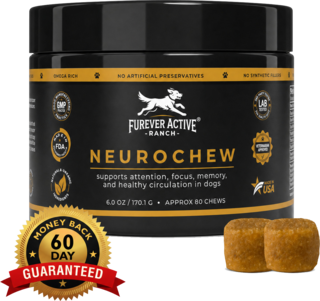
The pick: Our pick is NeuroChew, our own daily brain-health chew, held to the standard this guide teaches.
Reason one: Built for daily brain support, not sedation.
Reason two: Veterinarian-approved, with Dr. Ruth Roberts, DVM, CVFT as the named endorser.
Reason three: A 60-day guarantee, refunded even on an empty bottle.
Skip it if: Your dog has new, sudden, or severe symptoms, is pregnant, nursing, or a puppy, is on medication, or is managing an existing condition without your veterinarian's input.
What this category is, and is not
Veterinarians may recommend complementary calming supplements to be used in conjunction with a structured behavior modification plan. That single framing already defines the category.
These products are ingestible adjuncts: soft chews, tablets, drops, or bars sold as complementary options.
They are not a diagnosis, not a sedative prescription, and not a stand-alone fix. Gradual practice, predictable routines, and a clear line for medical workups still own the hard work.
If the bag markets itself as the whole answer, read that as an honesty problem on the brand side, not as proof the chew is stronger.
Source: VCA Animal Hospitals
Bottom line: these chews are adjuncts inside a plan, not the plan.
How to judge any calming-treat label

Veterinary guidance often suggests using calming aids alongside a structured behavior modification plan, rather than as a standalone fix. Use that rule as the label filter, then run five practical checks on every pouch, including ours: (1) plan honesty, does the brand admit the product is complementary; (2) printed-amount test, every active milligram is printed or you assume the worst; (3) ingredient class, amino-acid calm stack, milk-peptide story, sedative-herb or sleep-hormone stack, or daily brain-support panel; (4) evidence posture, weak or mixed evidence stated plainly versus certainty the sources never earned; (5) job fit, short-window event support versus a daily routine.
Ranking brands is the sibling article's job.
Literacy is this one's.
Source: VCA Animal Hospitals and PetMD
Bottom line: plan fit and printed milligrams beat front-panel calm claims.
L-theanine and the common calm-amino class

Ingredients like L-theanine, an amino acid found in green tea, may help support relaxation and calm behavior in anxious or fearful dogs. That is aisle context from consumer veterinary sources, not a claim about NeuroChew.
Many popular calm pouches lean on L-theanine, tryptophan, or similar amino-acid stories.
The useful owner move is simple: find the printed milligram amount, or assume the worst if the label hides it inside a proprietary blend. Fairy-dusting stacks impressive names under one combined figure so you never learn how much of each active is present.
NeuroChew does not list L-theanine.
Related: calming pheromones for dogs
We built for daily brain support rather than the sedative-herb and sleep-hormone stack that dominates much of this shelf.
Bottom line: score amino-acid calm stacks on printed milligrams first.
L-theanine without the drowsiness sales pitch
L-theanine, an amino acid from green tea, may help promote relaxation in dogs without causing drowsiness. Keep that as ingredient-class context when a bag sells calm without a sleep story.
Absence of drowsiness language is not proof the product works for your dog.
It is one more reason to separate a non-sedating amino-acid option from melatonin or sedative-herb stacks that sell sleep as calm. If your veterinarian is aiming for alert settle rather than knockout, that distinction matters on the label.
Bottom line: non-drowsy framing is a class clue, not a result guarantee.
Tryptophan as a serotonin-pathway story on the bag
Ingredients like tryptophan act as precursors to serotonin and may help support the regulation of mood and stress responses in dogs. That is mechanism-style aisle language, not a blank check for every bag that prints the name.
Treat tryptophan the same way you treat L-theanine: demand a milligram line, refuse proprietary blends that hide the dose, and keep expectations modest.
NeuroChew does not list tryptophan. If a competitor leads with a serotonin story, the printed amount still decides whether the label earns trust.
Source: Animals (Basel) via PubMed Central
Bottom line: precursor language still needs a printed dose.
Alpha-casozepine and milk-peptide evidence limits
Alpha-casozepine is a milk-derived peptide that may help manage stress and anxiety-related behaviors in dogs. The evidence base is limited, and that ceiling matters more than the marketing paragraph on the back of the bag.
Presence on a label is not the same thing as a strong, consistent result across dogs.
Evidence-tier language belongs in the category explainer itself, not in a footnote you skip. NeuroChew does not list alpha-casozepine.
If a competitor bag features this peptide, read the dose, read the study limits, and keep it as one ingredient-class option among several rather than a default winner.
Bottom line: milk-peptide names need evidence ceilings, not hero claims.
Milk-peptide potential without the upgrade language
Alpha-casozepine, a peptide derived from milk, has shown some potential in studies to help manage behaviors associated with stress in dogs. Some potential is the honest tier, not a crown.
Individual dogs still respond unevenly, and a diet-level or mixed study does not prove one pulled isolate will behave the same way inside every soft chew.
Related: do calming treats work for dogs
When a brand upgrades weak evidence into certainty, disqualify the story even if the ingredient name sounds clinical. Our label does not list this peptide, so milk-protein calm claims stay category context only.
Bottom line: some potential is not a guaranteed calm outcome.
Why responses vary and evidence is still thin
Individual dogs may respond differently to dietary calming aids, and current scientific research remains limited or emerging. That sentence is the category's ceiling for almost every OTC pouch on the shelf.
Limited evidence is not a ban.
It is a reason to keep expectations modest, keep training and environment in charge, and refuse labels that sell certainty the literature never earned. Hold that posture on every bag you compare, including the ones with the most confident front-panel language.
Bottom line: variable response plus thin evidence is the honest default.
What still needs better clinical trials
While some OTC calming aids show promise, more robust, peer-reviewed clinical trials are needed to fully confirm their efficacy. Use that as a shopping rule, not a footnote.
When a front panel implies certainty the studies never earned, the label already failed the evidence posture test.
A fair category explainer rewards brands that state the honest ceiling and rejects certainty language the research does not support. Your veterinarian can still place a complementary product inside a plan; that clinical judgment is not the same thing as a bag selling proof it does not have.
Bottom line: promise language cannot outrun the trial base.
Pheromones as non-ingested context, not a treat
Veterinarians sometimes recommend synthetic pheromones to help comfort and calm dogs in stressful environments. That is a useful reminder that not every calm tool has to be a treat.
Diffusers, collars, sprays, and other environmental aids can sit beside training and, when appropriate, an ingested option.
They also make a cleaner category frame: if the dog only struggles in the car, the crate, or a boarding week, an environmental aid may fit the moment better than a daily chew. A pheromone tool changes the space.
A calming treat changes what goes in the bowl.
Keep the modalities separate when you shop.
Bottom line: not every calm tool is an ingestible treat.
What synthetic pheromone products actually mimic
Synthetic pheromone products mimic the natural pheromones mother dogs produce, which may help soothe and calm some dogs. That is the mechanism story for the non-ingested lane, not a reason to crown a diffuser over a chew or the reverse.
Related: 4health calming aid supplement bars for dogs
Some households notice easier settling when the rest zone stays consistent.
Others notice nothing. Use pheromone tools as optional environment support, then keep only what your dog shows you.
They do not prove anything about a treat bag on the same shelf.
Bottom line: pheromone mimicry is environment support, not treat proof.
Pressure vests and other non-chew limits
The current scientific evidence supporting the effectiveness of pressure vests in reducing stress for anxious dogs is limited and mixed. Owners still reach for them because the idea is intuitive and the product is easy to try.
Hold both facts at once: some dogs appear more settled in a wrap, and the published support is not strong enough to crown the vest as a default solution.
Use that same honesty on every non-chew aid and on every treat bag next to it. Limited evidence is not a ban.
It is a reason to keep expectations modest and to keep the behavior plan in charge.
Bottom line: mixed vest evidence is a model for modest treat expectations too.
Training and environment still outrank a pouch alone
Calming aids are typically most effective when combined with positive reinforcement training and an optimized, low-stress environment. That is the order of operations for the whole category.
Shrink rehearsal of the panic pattern, fix the room and the departure ritual, then consider a transparent chew only as a small adjunct.
If marketing implies the treat replaces coaching, that is advertising, not behavior medicine. Multimodal support is still support inside a plan, not a license to treat every aisle item as a default solution.
Source: PetMD and VCA Animal Hospitals
Bottom line: training and environment stay above the pouch.
When OTC calming aids are not enough
For severe behavioral distress, extreme panic, or self-injurious behavior, seek professional veterinary or behaviorist help immediately, as OTC calming aids may not be sufficient. Self-chosen pouches are not triage.
Sudden behavior change, night disorientation, or pain signs also belong on the exam table before another bag enters the cart.
Complementary options can still matter later. They do not own the emergency lane.
Related: adaptil calming collar for dogs
Bottom line: severe panic is a clinic problem, not an aisle upgrade.
Never improvise with human calm products
Never give human calming supplements or medications to your dog, as they can contain ingredients toxic to pets. Human doses are not dog doses.
If a product was built for people, keep it out of the dog bowl unless your veterinarian specifically directs a preparation and amount.
Pet-labeled products still need a transparent milligram panel and a plan that includes training and medical judgment.
Source: PetMD
Bottom line: human calm products are not dog-safe improvisations.
Our answer to the calming-aid question
Full transparency: NeuroChew is ours. It's a veterinarian-approved daily soft chew that supports normal brain function and healthy circulation in dogs.
It's daily support, not medicine, designed to fit alongside your vet's plan rather than replace it. Dr.
Ruth Roberts, DVM, CVFT, puts it this way: "I support NeuroChew because it's the first dog chew that supports both brain function and healthy circulation!" If the signs above sound familiar, a daily brain-support routine is one of the simplest places to start.
Frequently asked questions
What are calming treats for dogs?
They are ingestible adjuncts sold as complementary options inside a wider plan of training, environment work, and veterinary guidance. They are not stand-alone answers and not the same job as a daily brain-health soft chew with a different active panel.
How do I judge a calming treat label?
Check plan honesty, printed milligram amounts for every active, ingredient class, evidence posture, and job fit (event vs daily). If actives hide inside a proprietary blend, score transparency low even when the front panel sounds calmer.
Do vets recommend calming treats?
Veterinarians may recommend complementary calming supplements to be used in conjunction with a structured behavior modification plan. That is adjunct support, not a signal that every aisle product is interchangeable or appropriate for every dog.
Are there any dog calming treats that actually work?
Some dogs appear more settled when a complementary calming supplement sits inside a real behavior plan, but individual dogs may respond differently and research remains limited or emerging. Compare printed amounts and evidence limits rather than star ratings alone.
Is it okay to give my dog calming treats every day?
Daily use depends on the product's label, your dog's health status, and your veterinarian's guidance. A complementary calming supplement still belongs beside structured behavior work, and NeuroChew is positioned as daily brain-health support with a weight-based soft-chew chart rather than a sedative stack.
When should I skip the aisle and call the clinic first?
For severe behavioral distress, extreme panic, or self-injurious behavior, seek professional veterinary or behaviorist help immediately, as OTC calming aids may not be sufficient. Also call first for sudden behavior change or pain signs.
These aisle products are tools, not trophies. Ask whether the bag prints every active amount, whether the formula is built for a short window or a daily routine, and whether training, environment, and a veterinarian still sit above the pouch when red-flag signs show up.
NeuroChew is one daily brain-health option with a printed panel and a weight-based soft-chew chart. That is a commercial product with a 60-day guarantee, not a promise that a pouch replaces a plan.
For brand-by-brand ranking language, switch to the vet-recommended sibling; for what the category is and how to read it, stay here.
References
- Behavior Counseling - Complementary Medication, VCA Animal Hospitals. https://vcahospitals.com/know-your-pet/behavior-counseling---medication-complementary
- What to Know About Calming Aids for Dogs: Supplements, Toys, and More, PetMD. https://www.petmd.com/dog/behavior/dog-calming-products-help-ease-dog-anxiety
- L-Theanine, VCA Animal Hospitals. https://vcahospitals.com/know-your-pet/l-theanine
- Behavior Counseling - Complementary Medication, VCA Animal Hospitals. https://vcahospitals.com/know-your-pet/behavior-counseling---medication-complementary
- Dietary Strategies for Relieving Stress in Pet Dogs and Cats, Animals (Basel) via PubMed Central. https://pmc.ncbi.nlm.nih.gov/articles/PMC10045725/
As of July 2026
Get practical dog wellness tips by email
Occasional, useful guidance on keeping your dog healthy and happy. Unsubscribe anytime.
No spam. We respect your inbox.
Support your dog's brain health with NeuroChew
NeuroChew is our daily soft chew for dogs, made fresh in the USA. See the ingredients and how it fits into a healthy daily routine.
Learn more about NeuroChew