Dog Brain Health
How to Help Dog with Anxiety: A Practical Owner Plan


How to help dog with anxiety starts with pattern recognition, a safe space, energy management, and trigger notes, not with a random pouch. Complementary aids stay optional after training and veterinary guidance, and severe panic belongs in the clinic first.
Most owners do not open how to help dog with anxiety on a calm afternoon. They open it after a chewed door frame, a storm night, or a goodbye that ends in panic.
Related: best over the counter anxiety meds for dogs
This guide keeps the order honest: name the pattern, build a boring safe space, burn energy before hard moments, log triggers, rehearse mild versions, skip punishment, and call the clinic when the problem is severe. We sell NeuroChew for daily brain support, and we will say when a chew is not the next move.
AT A GLANCE
The pick: Our pick is NeuroChew, our own daily brain-health chew, held to the standard this guide teaches.
Reason one: Built for daily brain support, not sedation.
Reason two: Veterinarian-approved, with Dr. Ruth Roberts, DVM, CVFT as the named endorser.
Reason three: A 60-day guarantee, refunded even on an empty bottle.
Skip it if: Your dog has new, sudden, or severe symptoms, is pregnant, nursing, or a puppy, is on medication, or is managing an existing condition without your veterinarian's input.
Name the pattern before you buy a fix

Recognizing signs of anxiety in your dog, such as pacing, panting, vocalizing, or destructive behaviors when left alone, is an important first step in addressing their distress. Write the time, the trigger, and what stopped the episode.
That log is how you answer how to help dog with anxiety without shopping blind.
Share the notes with your veterinarian instead of a vague "he gets upset." Pattern first, cart second.
Source: Cornell Riney Canine Health Center
Bottom line: a dated log of signs beats guessing which product to try first.
Build a boring, reliable safe space

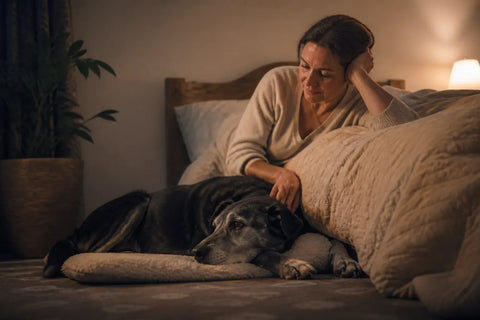
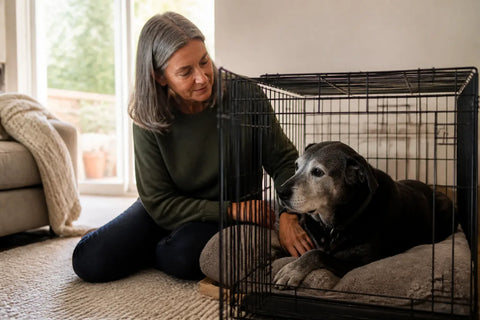
Providing a quiet, stable safe space, such as a cozy crate or a designated room with comfortable bedding, may help an anxious dog feel more secure. Make it available when you are home so the space does not only mean abandonment.
Soft bedding, water, and a chew toy that is safe when unsupervised are enough to start.
If the dog panics harder in a closed crate, switch to an open pen and ask a trainer before forcing confinement. The goal is lower arousal, not a prettier prison.
Source: Cornell Riney Canine Health Center and Today's Veterinary Practice
Bottom line: a predictable den lowers baseline arousal before harder training starts.
Burn energy before hard moments
Scheduling exercise and interactive play sessions before you leave or before bedtime may help settle your dog's nervous energy. A brisk sniff walk plus two minutes of easy training beats a frantic fetch that revs the dog up.
Match intensity to age and joint comfort.
Then leave on a calm note instead of a guilty farewell tour. Energy management is not a cure, but it makes every later step easier to read.
Bottom line: a short pre-departure workout can take the edge off leftover energy.
Track triggers so the clinic has something to use
Tracking details about what triggers your dog's anxiety, when it occurs, and how they react can help your veterinarian build a targeted management plan. Use a 0-5 intensity score and note whether food, visitors, storms, or departures started it.
Related: can dogs get anxiety after pneumonia
Bring phone video when you can.
Good notes shorten the path to the right training or medication discussion. Vague summaries slow the right plan.
Bottom line: timestamps and intensity scores turn vague worry into a plan.
Practice mild versions of the trigger
Gradually exposing a dog to mild versions of their triggers while pairing the experience with positive reinforcement may help ease their anxious responses. Start below the panic threshold: keys in hand without leaving, a far thunder recording at low volume, a guest at the gate instead of in the kitchen.
Pay calm behavior, then stop while the dog is still succeeding.
If you overshoot into full panic, you taught the wrong lesson. Hire a force-free professional when you cannot keep sessions easy.
Bottom line: tiny rehearsals with payoffs beat flooding the dog into panic.
Never punish the panic
Avoid punishing or scolding your dog for anxious behaviors, as this can increase their distress and escalate the underlying anxiety. A chewed door frame after a solo hour is information, not defiance.
Yell once and you may pair your return with more fear next time.
Clean up, log the event, and change the setup: shorter absences, better enrichment, clinic review if destruction is the pattern. Discipline theater feels active and still makes the plan worse.
Bottom line: scolding fear adds a second problem on top of the first.
Mask the startling soundtrack
Playing white noise or gentle music may help mask startling sounds like thunder or fireworks, helping to keep an anxious dog calmer. Start the sound before the storm band arrives so it is not a cue that danger just began.
Combine it with the safe space and a long-lasting chew if the dog can take food.
Turn volume up only enough to soften spikes, not enough to stress the dog another way. Sound masking is a helper, not the whole protocol.
Related: do dogs have anxiety attacks
Source: Today's Veterinary Practice
Bottom line: steady background sound can blunt spikes from thunder or fireworks.
A worn shirt for short absences
Placing a recently worn piece of your clothing in your dog's safe area may help comfort them with your scent when they are left alone. Use a shirt you can sacrifice to drool, not a choking hazard with buttons hanging loose.
Pair the scent item with a short, practiced absence rather than a four-hour first trial.
If the dog ignores the shirt, that is data, not failure. Keep the bigger plan of exercise, space, and gradual practice in charge.
Bottom line: familiar scent is a low-cost comfort add-on, not a stand-alone cure.
Severe cases need the veterinarian in front
If your dog suffers from severe anxiety, consult your veterinarian to discuss whether behavioral therapies or prescription medical options are appropriate. Self-injury, aggression, or panic that blocks normal life is not a retail-chew problem.
Ask about pain, medical differentials, and a referral to a behavior professional when needed.
Bottom line: clinic and training lead; any daily chew is judged later on printed amounts.
Gut-brain research is an optional clinic lane
Consult your veterinarian about dietary options; research into the canine gut-brain axis suggests that supporting gut health may help promote a calmer temperament. That is an emerging adjunct conversation, not step one of how to support a worried dog.
Do not rebuild the whole bowl from a social post.
Bring stool history and current food to the visit if you want this lane explored. Training and safety still outrank microbiome curiosity.
Source: Peer-reviewed article via PubMed Central and Veterinary Medicine International (Wiley, formerly Hindawi), via NCBI/PMC and Animals (MDPI)
Bottom line: diet talks about calm temperament stay under veterinary guidance.
Strain-specific probiotics are not a generic promise
Supplementation with specific beneficial bacteria, such as *Lactiplantibacillus plantarum*, has been studied for its potential to help lower canine anxiety and aggression scores. Read that as strain-specific research, not as permission to assume every probiotic equals that trial.
Ask your veterinarian before adding any live-culture product beside other meds.
Labels still have to name what you are actually buying.
Related: high anxiety dog crate
Source: Peer-reviewed article via PubMed Central
Bottom line: one studied strain does not transfer to every bottle on the shelf.
Microbiome support still varies by dog
Because research on the canine gut microbiome and behavior is still emerging, the effectiveness of microbiome-focused support can vary from dog to dog. Keep the same trial log you use for training: trigger, change, two-week score.
Source: Animals (MDPI) and Veterinary Medicine International (Wiley, formerly Hindawi), via NCBI/PMC
Bottom line: emerging gut-behavior science means modest expectations and good notes.
Our answer to the calming-aid question
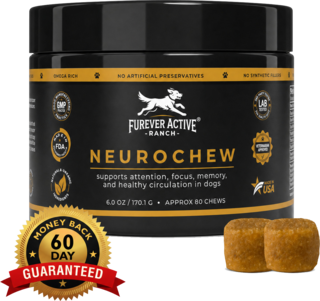
Full transparency: NeuroChew is ours. It's a veterinarian-approved daily soft chew that supports normal brain function and healthy circulation in dogs.
It's daily support, not medicine, designed to fit alongside your vet's plan rather than replace it. Dr.
Ruth Roberts, DVM, CVFT, puts it this way: "I support NeuroChew because it's the first dog chew that supports both brain function and healthy circulation!" If the signs above sound familiar, a daily brain-support routine is one of the simplest places to start.
Frequently asked questions
How do I settle my dog's anxiety?
Start with a safe space, pre-event exercise, and short positive practice at a level the dog can handle. Skip punishment, mask startling noise when storms hit, and call your veterinarian when distress is severe. Products stay adjuncts after that order.
What can you give dogs to ease anxiety?
What you give should be veterinarian-guided: behavior therapy first, then prescription options when needed, and only then complementary aids you can actually measure. We do not authorize a home pharmacy list. Ask before stacking chews, pheromones, or diet changes.
What are signs of anxiety in dogs?
Common owner-visible patterns include restless pacing, heavy panting without heat exercise, repeated vocalizing, and destruction tied to being alone. Note timing and triggers rather than relying on a single checklist diagnosis. Share video with your veterinarian when you can.
How to relax a dog?
Lower the stakes: quiet space, predictable routine, enough movement before hard moments, and calm practice below the panic line. White noise can blunt sound spikes. If the dog cannot take food or settle at all, you are past a simple relax tip and into clinic territory.
When should I see a vet for dog anxiety?
Go sooner when panic is severe, safety is at risk, or home changes stall. Your veterinarian can sort pain, medical issues, behavior therapy, and medication options. Do not wait through escalating destruction or self-injury.
Where does a daily brain-support chew fit in the plan?
Only after logging patterns, home setup, training practice, and any needed veterinary care. NeuroChew is a daily soft chew with printed actives for brain-support nutrition context. It is not a substitute for training, behavior therapy, or clinic-led care. how to support a worried dog is an ordered plan: log the pattern, stabilize the environment, practice mild triggers, refuse punishment, mask noise spikes, and let the veterinarian lead when distress is severe. Gut-health ideas stay optional and clinic-guided. If you later compare daily chews, prefer printed panels and commercial policies you can verify, such as NeuroChew's weight-based soft-chew chart and 60-day empty-bottle refund framing, without treating any pouch as the whole plan.
An ordered plan beats a product stack: observe, set up the home, practice below threshold, and bring severe cases to your veterinarian. Recognizing signs of anxiety in your dog, such as pacing, panting, vocalizing, or destructive behaviors when left alone, is an important first step.
If your dog suffers from severe anxiety, consult your veterinarian to discuss whether behavioral therapies or prescription medical options are appropriate.
References
- Anxious behavior: How to help your dog cope with unsettling situations, Cornell Riney Canine Health Center. https://www.vet.cornell.edu/departments-centers-and-institutes/riney-canine-health-center/canine-health-topics/anxious-behavior-how-help-your-dog-cope-unsettling-situations
- Noise and Storm Phobias and Anxiety in Dogs, Today's Veterinary Practice. https://todaysveterinarypractice.com/behavior/noise-storm-phobias-anxiety-in-dogs/
- Gut microbiota composition is related to anxiety and aggression scores in companion dogs, Peer-reviewed article via PubMed Central. https://pmc.ncbi.nlm.nih.gov/articles/PMC12234828/
- Efficacy of a Novel Lactiplantibacillus plantarum Strain in Reducing Canine Aggression and Anxiety: A Randomized Placebo-Controlled Trial, Peer-reviewed article via PubMed Central. https://pmc.ncbi.nlm.nih.gov/articles/PMC12345577/
- Gut-Brain Axis Impact on Canine Anxiety Disorders: New Challenges for Behavioral Veterinary Medicine, Veterinary Medicine International (Wiley, formerly Hindawi), via NCBI/PMC. https://pmc.ncbi.nlm.nih.gov/articles/PMC10827376/
- The Relationship between Canine Behavioral Disorders and Gut Microbiome and Future Therapeutic Perspectives, Animals (MDPI). https://pmc.ncbi.nlm.nih.gov/articles/PMC11273744/
As of July 2026
Get practical dog wellness tips by email
Occasional, useful guidance on keeping your dog healthy and happy. Unsubscribe anytime.
No spam. We respect your inbox.
Support your dog's brain health with NeuroChew
NeuroChew is our daily soft chew for dogs, made fresh in the USA. See the ingredients and how it fits into a healthy daily routine.
Learn more about NeuroChew