Dog Brain Health
Can Dogs Get Anxiety After Pneumonia?


Can dogs get anxiety after pneumonia? Yes. Clinic stays, medication timing, and a broken home routine can leave some dogs clingy, restless, or reactive after the cough eases. Read that window as recovery stress, clear unfinished medical issues first, and rebuild a boring, predictable day before you chase single-product fixes.
You brought your dog home after pneumonia care and expected quiet nights again. Instead the hallway pacing started, crate time got harder, or your dog glued to your hip.
Related: apple cider vinegar for dogs
People searching can dogs get anxiety after pneumonia usually want a recovery map: what the stress window looks like, which signs mean call the clinic, how alone-time patterns form after round-the-clock care, and what early gut-behavior research can and cannot add. This guide stays in owner education and keeps every claim inside its source ceiling.
AT A GLANCE
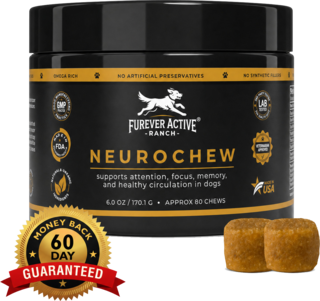
The pick: Our pick is NeuroChew, our own daily brain-health chew, held to the standard this guide teaches.
Reason one: Built for daily brain support, not sedation.
Reason two: Veterinarian-approved, with Dr. Ruth Roberts, DVM, CVFT as the named endorser.
Reason three: A 60-day guarantee, refunded even on an empty bottle.
Skip it if: Your dog has new, sudden, or severe symptoms, is pregnant, nursing, or a puppy, is on medication, or is managing an existing condition without your veterinarian's input.
Why recovery can leave a steady dog rattled

Anxiety in dogs can be triggered by sudden environmental changes, disruptions in daily routine, or exposure to unfamiliar and unsettling situations. Pneumonia recovery often stacks those triggers in one short stretch: clinic smells, overnight schedule changes, shorter walks, medication alarms, restricted play, and a house that no longer runs on the old map of the day.
Cornell's owner guidance on anxious behavior stresses predictable routine and consistency when a dog is coping with unsettling conditions, including keeping feeding, rest, and departure cues as boring and repeatable as the medical plan allows.
If the household still feels rearranged weeks later, rebuild the day first: same wake window, same quiet rest spot, same short enrichment, same calm departure ritual. Nearby reading on this blog includes [dog sleep aggression](/blogs/senior-dog-care/dog-sleep-aggression), senior cognition notes at [how to calm a dog with dementia](/blogs/senior-dog-care/how-to-help-a-dog-with-dementia), [puppy neurological issues](/blogs/senior-dog-care/signs-of-neurological-problems-in-puppies), and [dog pregnancy vitamins](/blogs/senior-dog-care/multivitamins-for-pregnant-dogs).
Source: Cornell Riney Canine Health Center
Bottom line: Anxiety in dogs can be triggered by sudden environmental changes, disruptions in daily routine, or exposure to unfamiliar and unsettling situations.
What unsettled behavior can look like after illness

Anxious dogs may show physical and behavioral signs such as panting, pacing, trembling, or withdrawal from social interactions. After a hard illness, those signs often show up when the day still feels rearranged and the dog is coping with unsettling conditions.
Cornell's anxious-behavior guidance is useful as owner education covering causes of anxiety, the value of a predictable routine, and clear escalation to a veterinarian or veterinary behaviorist when the pattern does not settle.
Keep a simple log for your veterinarian: what you see, when it started relative to the illness, and what else changed in the house. Bring that log if the pattern holds.
Source: Cornell Riney Canine Health Center
Bottom line: Anxious dogs may show physical and behavioral signs such as panting, pacing, trembling, or withdrawal from social interactions.
Pain and incomplete recovery can look like nerves
Because physical pain or underlying discomfort can cause behavioral changes that resemble anxiety, a veterinarian should evaluate any sudden or worsening behavioral shifts to rule out physical issues. Owner triage after a hard illness should stay medically careful: restlessness or behavior that looks like anxiety, plus trouble getting comfortable, can still be discomfort showing up sideways.
Merck's pain-recognition guidance is the right frame here.
Related: how much melatonin can i give my dog for anxiety
Get a veterinary evaluation before you decide the change is only emotional.
Source: Merck Veterinary Manual
Bottom line: Because physical pain or underlying discomfort can cause behavioral changes that resemble anxiety, a veterinarian should evaluate any sudden or worsening behavioral shifts to rule out physical issues.
When the pattern needs a structured plan
If a dog shows severe or worsening anxiety, consult a veterinarian or professional behaviorist to develop a structured, individualized behavior management plan. A blog cannot build that plan for your dog.
Keep the order honest: medical clearance first, then behavior work that fits the household, then any adjunct tools your clinician supports.
ASPCA separation-anxiety education is clear that context matters and that owner checklists are not a substitute for professional evaluation. Cornell's owner materials also point severe or stuck cases toward a veterinarian or veterinary behaviorist rather than open-ended home experiments.
Source: ASPCA
Bottom line: If a dog shows severe or worsening anxiety, consult a veterinarian or professional behaviorist to develop a structured, individualized behavior management plan.
Alone-time distress is a separate pattern to name
Separation anxiety may cause dogs to vocalize, exhibit destructive behaviors, or urinate and defecate indoors when separated from their owners. Recovery weeks can create or amplify that pattern when dogs spend more hours glued to caregivers, then face longer alone stretches when normal departures resume.
VCA's board-certified behaviorist guidance describes distress vocalization, destruction aimed at exits and owner items, and house soiling when separated.
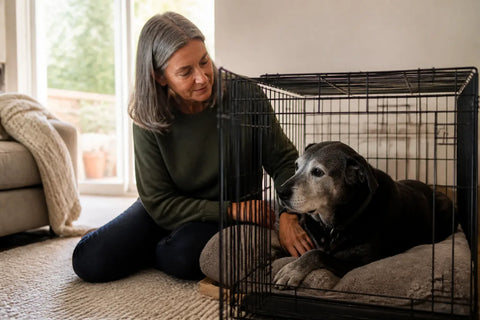
It also frames lasting improvement around a retraining program with graduated mock departures and desensitization, not around a single product swap, and it cautions that crates can intensify escape attempts in some distressed dogs. If alone-time damage is the main story after illness care, name that pattern and ask for a behavior plan built for departures.
Source: VCA Animal Hospitals and ASPCA
Bottom line: Separation anxiety may cause dogs to vocalize, exhibit destructive behaviors, or urinate and defecate indoors when separated from their owners.
Do not punish the recovery-week messes
Punishing a dog for behaviors associated with anxiety, such as destructive chewing or vocalizing when left alone, can increase their anxiety and should be avoided. Scolding a dog who chewed a door frame after a hard clinic week usually teaches the dog that the already-scary moment now includes your anger too.
ASPCA and VCA separation-anxiety materials both steer owners away from punishment for distress behaviors.
Related: best over the counter anxiety meds for dogs
Clean up, protect the dog from rehearsing the panic pattern, shorten practice departures to a level the dog can handle, and put the energy into routine and professional guidance instead of corrections.
Source: ASPCA and VCA Animal Hospitals
Bottom line: Punishing a dog for behaviors associated with anxiety, such as destructive chewing or vocalizing when left alone, can increase their anxiety and should be avoided.
Where gut-brain talk fits in a recovery story
The gut-brain axis may influence canine anxiety through complex, bidirectional communication between the central nervous system and the gastrointestinal tract. Owners sometimes hear microbiome language while a dog is still recovering from hard illness, then wonder if gut talk explains the new restlessness.
A 2024 Veterinary Medicine International review walks metabolic, neural, endocrine, and immune pathways that link microbiota and anxious behavior in dogs, and it also says canine-specific evidence is still scarce and exploratory.
Use that framing for honest education only. It is not a recovery protocol and not proof that changing the microbiome will rewrite behavior on demand while you still need medical follow-up and a calmer day structure.
Source: Veterinary Medicine International (Wiley, formerly Hindawi), via NCBI/PMC
Bottom line: The gut-brain axis may influence canine anxiety through complex, bidirectional communication between the central nervous system and the gastrointestinal tract.
Association is not a leash you can yank
Studies suggest a correlation may exist between the composition of a companion dog's gut microbiota and its levels of anxiety and aggression. The 2025 Pellowe et al.
work in Scientific Reports is observational: owner-rated C-BARQ scores, fecal sequencing, and carefully worded associations, including a consistent link involving the genus Blautia and anxiety scores.
The study did not test diet changes or any supplement, and overall bacterial differences between groups were small. Correlation can inform curiosity during a long convalescence.
It cannot justify a causal medical claim about post-illness mood, and it cannot replace pain checks, routine rebuild, or a behavior plan when alone-time distress is the real problem.
Source: Peer-reviewed article via PubMed Central
Bottom line: Studies suggest a correlation may exist between the composition of a companion dog's gut microbiota and its levels of anxiety and aggression.
Strain-specific probiotic findings stay strain-specific
A specific strain of Lactiplantibacillus plantarum may assist in reducing anxiety and aggression behaviors in some dogs, though individual responses can vary. That finding belongs to a randomized, placebo-controlled trial on that strain.
Related: do dogs have anxiety attacks
Do not transfer the result to an unrelated formula that is not documented as containing the same organism, and do not read it as pneumonia recovery guidance.
When marketing waves a generic gut banner at a post-illness household, ask which organism, which dose, and which species the trial actually used. For nearby label-reading topics, see [ashwagandha for dogs dosage](/blogs/senior-dog-care/can-dogs-have-ashwagandha), [collagen for senior dogs](/blogs/senior-dog-care/collagen-for-dogs), [does cosequin really work for dogs](/blogs/senior-dog-care/cosequin-for-dogs-review), and [senilife for dogs ingredients](/blogs/senior-dog-care/supplements-for-dog-dementia).
Source: Peer-reviewed article via PubMed Central
Bottom line: A specific strain of Lactiplantibacillus plantarum may assist in reducing anxiety and aggression behaviors in some dogs, though individual responses can vary.
The research is early, and saying so is the point
While initial research is promising, the scientific understanding of the relationship between the canine gut microbiome and behavioral disorders is still emerging. The 2024 Animals review supports mechanism-level explanation only and still states that no study yet shows any intervention, including FMT, improves canine behavioral symptoms.
Keep that ceiling in view when marketing implies a gut shortcut through the hard weeks after pneumonia.
The practical recovery stack stays ordinary on purpose: veterinary clearance, predictable routine, honest alone-time work, and no punishment for distress.
Source: Animals (MDPI)
Bottom line: While initial research is promising, the scientific understanding of the relationship between the canine gut microbiome and behavioral disorders is still emerging.
Our answer to the calming-aid question
Full transparency: NeuroChew is ours. It's a veterinarian-approved daily soft chew that supports normal brain function and healthy circulation in dogs.
It's daily support, not medicine, designed to fit alongside your vet's plan rather than replace it. Dr.
Ruth Roberts, DVM, CVFT, puts it this way: "I support NeuroChew because it's the first dog chew that supports both brain function and healthy circulation!" If the signs above sound familiar, a daily brain-support routine is one of the simplest places to start.
Frequently asked questions
Can dogs get anxiety after pneumonia?
Yes. Hard illness, clinic schedules, and a rearranged home can leave some dogs unsettled even after breathing improves. Start with a veterinary check for unfinished medical issues, then rebuild a predictable day.
Related: high anxiety dog crate
Why is my dog's anxiety getting worse?
Escalating signs can track ongoing discomfort, another medical issue, or a routine that never stabilized after illness. Sudden or climbing behavior changes belong with a veterinarian first, not with a longer product stack.
How long does it take for a dog to fully recover from pneumonia?
A blog cannot set a medical recovery clock for your dog. Behavior can stay unsettled while the household is still rearranged. Ask your veterinarian for the recovery plan that fits your dog's case.
What can I give my dog for anxiety?
Start with veterinary evaluation, then behavior and environment changes your clinician supports. Skip scolding for distress behaviors, and do not use a blog checklist as a substitute for a real plan.
What can vets do for dog anxiety?
Veterinarians rule out medical drivers, discuss behavior modification, and, when appropriate, involve a veterinary behaviorist or discuss prescription options. Owner education sources such as Cornell frame professional help as the path for severe or stuck cases.
Can alone-time problems start after a long illness?
Yes. Dogs who spent recovery weeks glued to caregivers can show distress vocalization, exit-focused destruction, or house soiling when normal departures resume. That pattern needs graduated practice and a behavior plan, not scolding.
Take post-illness restlessness seriously without letting a blog stand in for a clinic visit. Clear unfinished medical issues with your veterinarian, rebuild one predictable day, protect alone-time practice from panic rehearsals, and skip punishment for distress behaviors.
Keep microbiome talk early-stage and honest. If the pattern is severe or still climbing, ask for a structured behavior plan.
After medical and training pieces are in motion, a daily brain-support chew such as NeuroChew can be judged on printed amounts and structure-function framing only. It is not aftercare for a lung infection and not a stand-in for behavior work.
References
- Anxious behavior: How to help your dog cope with unsettling situations, Cornell Riney Canine Health Center. https://www.vet.cornell.edu/departments-centers-and-institutes/riney-canine-health-center/canine-health-topics/anxious-behavior-how-help-your-dog-cope-unsettling-situations
- Gut microbiota composition is related to anxiety and aggression scores in companion dogs, Peer-reviewed article via PubMed Central. https://pmc.ncbi.nlm.nih.gov/articles/PMC12234828/
- Efficacy of a Novel Lactiplantibacillus plantarum Strain in Reducing Canine Aggression and Anxiety: A Randomized Placebo-Controlled Trial, Peer-reviewed article via PubMed Central. https://pmc.ncbi.nlm.nih.gov/articles/PMC12345577/
- Gut-Brain Axis Impact on Canine Anxiety Disorders: New Challenges for Behavioral Veterinary Medicine, Veterinary Medicine International (Wiley, formerly Hindawi), via NCBI/PMC. https://pmc.ncbi.nlm.nih.gov/articles/PMC10827376/
- The Relationship between Canine Behavioral Disorders and Gut Microbiome and Future Therapeutic Perspectives, Animals (MDPI). https://pmc.ncbi.nlm.nih.gov/articles/PMC11273744/
- Separation Anxiety in Dogs, VCA Animal Hospitals. https://vcahospitals.com/know-your-pet/separation-anxiety-in-dogs
- Separation Anxiety, ASPCA. https://www.aspca.org/pet-care/dog-care/common-dog-behavior-issues/separation-anxiety
- Recognizing and Assessing Pain in Animals, Merck Veterinary Manual. https://www.merckvetmanual.com/special-pet-topics/pain-management/recognizing-and-assessing-pain-in-animals
As of July 2026
Get practical dog wellness tips by email
Occasional, useful guidance on keeping your dog healthy and happy. Unsubscribe anytime.
No spam. We respect your inbox.
Support your dog's brain health with NeuroChew
NeuroChew is our daily soft chew for dogs, made fresh in the USA. See the ingredients and how it fits into a healthy daily routine.
Learn more about NeuroChew