Dog Brain Health
Calming Collar for Dogs: Pheromone Facts First


A calming collar for dogs is usually a plastic collar that continuously releases a synthetic dog-appeasing pheromone analog. It is an environmental support tool, not a sedative, and it works best beside behavior work and veterinary guidance rather than as a solo fix.
You are looking at a plastic strip that promises calm, and you want to know whether a calming collar for dogs is chemistry, marketing, or both. We make NeuroChew, a daily brain-health soft chew, not a collar.
Related: 4health calming aid supplement bars for dogs
What we bring to this aisle is the same label doctrine we use on our own bag: name the mechanism you can verify, refuse miracle percentages, and keep severe fear with a veterinarian. This page covers pheromone collars as a continuous, non-ingested adjunct, how major brands frame wear life and fit, and where a collar stops being the right tool.
AT A GLANCE
The pick: Our pick is NeuroChew, our own daily brain-health chew, held to the standard this guide teaches.
Reason one: Built for daily brain support, not sedation.
Reason two: Veterinarian-approved, with Dr. Ruth Roberts, DVM, CVFT as the named endorser.
Reason three: A 60-day guarantee, refunded even on an empty bottle.
Skip it if: Your dog has new, sudden, or severe symptoms, is pregnant, nursing, or a puppy, is on medication, or is managing an existing condition without your veterinarian's input.
What a pheromone collar actually is

A plastic strip on the neck is not a pill. Synthetic dog appeasing pheromones may mimic natural comforting signals to help soothe a stressed dog.
That is environmental signaling, not sedation and not a prescription anxiolytic.
Dog-appeasing pheromones are associated with the maternal-puppy bond; synthetic analogs are built to send a similar security cue while the dog wears the collar. Collars, sprays, and plug-in diffusers are the common delivery formats.
Collar form is for continuous on-body contact when the dog moves room to room or leaves the house with the trigger.
Humans and cats are not the intended audience for dog-specific DAP products. Judge the tool by behavior change and fit, not by how strong the package smells to you.
Source: VCA Animal Hospitals
Bottom line: a DAP collar is continuous environmental signaling, not a sedative.
Wear life and continuous contact rules
A collar that spends the day on the counter is jewelry. Pheromone calming collars should be worn continuously and are usually replaced every three to four weeks.
That replacement cycle matches the major retail DAP collars: ADAPTIL lists up to 4 weeks of continuous support, and Sentry and ThunderEase education commonly lands near 30 days.
Fit snugly enough for contact, with about one to two fingers of room when the brand says so. Leave the collar on except for bathing, swimming, or other water exposure when the maker says release pauses until dry.
Do not attach a leash to a pheromone collar when the brand forbids it.
ThunderEase is explicit that body heat activates release and that the collar is not a walking attachment. Replace on schedule; an expired or dangling collar is not the product the manuals describe.
Related: adaptil calming collar for dogs
Bottom line: continuous wear and a 3-to-4-week replace cycle are the real product.
Why results vary dog to dog
Retail photos sell certainty. The effectiveness of pheromone products can vary, and they may not work for all dogs.
Some dogs settle faster with a correctly fitted DAP collar during mild travel or noise stress.
Others show no usable change. That variance is expected, not a personal failure.
Run a fair trial with one clear trigger log, keep walks and feeding steady, and skip rotating five products in five days.
If nothing moves after continuous wear and a full replace cycle, stop stacking aisle tools and revisit the plan with your veterinarian.
Bottom line: variable response is normal; a no-change trial is still useful data.
Collars work best beside training and room setup
A strip on the neck does not teach a skill. Pheromone products may be most beneficial when paired with behavior modification and environmental management.
Desensitization, counterconditioning, a predictable rest zone, and trigger management still do the teaching.
The collar is background support while the dog practices. Board-certified behavior writing repeatedly places pheromones as adjuncts inside multimodal care, not as standalone cures.
If the only change you make is the brand on the collar tag, expect limited movement.
Bottom line: pair the collar with behavior work and environment tools, not alone.
How vets frame multimodal situational support
Clinic plans rarely crown one aisle product. To help manage situational stress, veterinarians may recommend combining pheromones, behavior counseling, and nutritional supplements.
Our house take treats that combination as complementary lanes by job, not as a clinical ranking: teaching and management do the heavy lift, environmental cues support the room, nutrition is optional when it fits the dog, and prescription care is a clinic decision when the case needs it.
Related: best calming treats for dogs vet-recommended
ADAPTIL, Sentry, and ThunderEase collars all sit in the DAP-class environmental row. Differences live in brand lineage, fit charts, scent additives, and heat-activation instructions, not in a secret second mechanism.
Keep any nutritional product on a separate decision track with printed milligrams and veterinary clearance.
Bottom line: pheromones, counseling, and nutrition are complementary lanes, not rivals.
Ask the clinic before you build a product stack
Sudden fear is not a shopping list problem. Consult your veterinarian to identify the most appropriate calming strategies and products for your dog's specific needs.
Pain, neurologic change, and medical drivers can look like attitude.
When signs are new or severe, start with that veterinary check before stacking aisle products. Bring a short log of trigger, body language, duration, and what you already tried.
A good visit sorts tools; it does not crown a miracle collar.
Bottom line: veterinary triage beats aisle stacking when the picture is unclear.
L-theanine is chew-aisle context, not collar proof
Supplement tabs bleed into collar shopping. L-theanine is an amino acid that may help promote calm behavior in dogs without causing sedation.
It shows up in many calming chews, which is why collar shoppers hear about it in the same browse path.
NeuroChew does not list L-theanine. Keep the jobs separate: a collar is continuous environmental signaling, and an amino-acid chew is an ingestible with its own label and evidence tier.
Run the printed-amount test on any bag before you treat ingredient marketing as a reason to skip training.
Bottom line: L-theanine is chew-aisle context, not a DAP collar claim.
Alpha-casozepine stays on the supplement shelf
Milk-protein marketing can ride next to collar listings. Some evidence suggests alpha-casozepine may help manage stress in dogs, though individual responses can vary.
Related: do calming treats work for dogs
The evidence base is limited, and the ingredient is not on the NeuroChew label.
Do not let a mattress, collar, or chew listing borrow credibility from a milk-protein trial it does not contain. If a bag leans hard on milk-protein language, ask for the printed amount and keep the product inside a veterinary-guided plan.
Source: Veterinary Evidence
Bottom line: alpha-casozepine does not upgrade a collar hangtag.
Pressure vests as a related, reversible experiment
Some dogs want steady contact; others fight the gear. Pressure vests may help some dogs feel more secure by applying gentle, continuous pressure, but scientific evidence of their benefits remains mixed.
A vest finding does not prove a pheromone collar works, and a collar trial does not prove a vest will.
Use either tool as one reversible experiment inside a wider plan, then keep only what your dog shows you. Fit, duration, cooling, and whether the dog can still move matter more than brand embroidery.
Bottom line: try pressure gear as a short test, not as proof the collar failed or won.
When a collar is the wrong first tool
Wrong tool is not the same as bad product. Severe behavioral issues, such as extreme fear or aggression, require professional veterinary evaluation rather than relying solely on over-the-counter calming aids.
Call the clinic first for sudden aggression, escape-with-injury risk, new severe panic, pain signs, or night restlessness that looks medical.
In our house, we would reach for a spray or diffuser when the problem looks like one room and one short event. Prefer a veterinary behavior plan when home management alone is failing.
Bottom line: severe, sudden, or medical-looking cases belong to the vet, not the collar aisle.
How to know if the collar is helping

Marketing will not score the trial for you. Monitor your dog's behavioral cues to determine if a calming aid is successfully helping them feel more relaxed.
Track entry willingness into the car or crate, recovery time after a known noise, and whether the dog can take food or respond to known cues during the stressor.
Write day-three, day-seven, and day-fourteen notes. If irritation, odor change, or neck damage appears, remove the collar and reassess.
Related: best over the counter anxiety meds for dogs
NeuroChew is not a collar alternative.
It is a daily brain-health soft chew with printed amounts, no melatonin or sedative herbs on the label, and a different job than continuous pheromone delivery.
Bottom line: score the collar by recovery and body language, not by packaging hopes.
So, where does NeuroChew fit into all this?
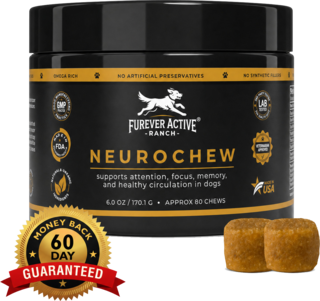
Full transparency: NeuroChew is ours. It's a veterinarian-approved daily soft chew that supports normal brain function and healthy circulation in dogs.
It's daily support, not medicine, designed to fit alongside your vet's plan rather than replace it. Dr.
Ruth Roberts, DVM, CVFT, puts it this way: "I support NeuroChew because it's the first dog chew that supports both brain function and healthy circulation!" If the signs above sound familiar, a daily brain-support routine is one of the simplest places to start.
Frequently asked questions
Do dog calming collars really work?
Sometimes for some dogs, and not as a solo plan. Synthetic dog-appeasing pheromone collars may help soothe situational stress for certain dogs, but effectiveness varies and results are strongest beside behavior modification and environmental management.
What do vets recommend for calming dogs?
Many clinicians favor a multimodal plan that can combine behavior counseling, environmental tools such as pheromones, and nutritional products when they fit the dog after a health check. Ask your veterinarian before stacking new products.
What is the best calming collar for dogs?
There is no universal winner. Choose a DAP-class collar with a clear wear life, a fit chart that matches your dog, and continuous-wear instructions. ADAPTIL, Sentry, and ThunderEase all sit in that class with roughly a month of wear.
How long should a dog wear a calming collar?
Major pheromone collars are designed for continuous wear and are usually replaced every three to four weeks. Leave them on except for water exposure when the brand says release pauses, and never use a forbidden collar as a leash attachment.
Do pheromone collars sedate dogs?
No. They deliver an environmental pheromone cue, not a sedative drug. If your dog needs true sedation or prescription anxiety care, that is a veterinary decision, not an aisle collar.
Is NeuroChew a collar alternative?
No. NeuroChew is a daily brain-health soft chew with printed active amounts and no melatonin or sedative herbs on the label. It is a different tool class from continuous pheromone delivery and does not replace training or veterinary care.
Buy a pheromone collar for continuous mild situational support when the package names a dog-appeasing mechanism, the fit is continuous and correct, and your veterinarian is still in the loop for anything sudden or severe. Pair it with behavior modification and room management.
Do not treat it as a sedative or a diagnosis. NeuroChew is a different tool class entirely: a daily brain-health soft chew with printed active amounts and no melatonin or sedative herbs on the label.
Read any product, collar or chew, by the printed facts first.
References
- Behavior Counseling - Complementary Medication, VCA Animal Hospitals. https://vcahospitals.com/know-your-pet/behavior-counseling---medication-complementary
- L-Theanine, VCA Animal Hospitals. https://vcahospitals.com/know-your-pet/l-theanine
- Pheromones, VCA Animal Hospitals. https://vcahospitals.com/know-your-pet/pheromones
- Is Alpha-casozepine Efficacious at Reducing Anxiety in Dogs?, Veterinary Evidence. https://veterinaryevidence.org/index.php/ve/article/view/67
- Are Pressure Vests Beneficial at Reducing Stress in Anxious and Fearful Dogs?, Veterinary Evidence. https://veterinaryevidence.org/index.php/ve/article/view/152
As of July 2026
Get practical dog wellness tips by email
Occasional, useful guidance on keeping your dog healthy and happy. Unsubscribe anytime.
No spam. We respect your inbox.
Support your dog's brain health with NeuroChew
NeuroChew is our daily soft chew for dogs, made fresh in the USA. See the ingredients and how it fits into a healthy daily routine.
Learn more about NeuroChew