Dog Brain Health
Calming Scents for Dogs: Chemistry Versus Wishful Thinking


Calming scents for dogs usually means dog-appeasing pheromone products or light aromatherapy trials. Pheromone tools are environmental supports with a stated mechanism, plant scents sit on thinner evidence, and neither is a solo fix when fear is severe.
You are standing in the aisle staring at sprays, collars, and diffuser plugs, trying to decide whether calming scents for dogs are real help or just pleasant packaging. We make NeuroChew, a daily brain-health soft chew, not a diffuser oil or a pheromone cartridge.
Related: adaptil calming collar for dogs
What we bring to scent categories is chemistry first: pheromone analog versus plant essential oil, toxicity second, and evidence third. The writing stays inside those ceilings.
AT A GLANCE
The pick: Our pick is NeuroChew, our own daily brain-health chew, held to the standard this guide teaches.
Reason one: Built for daily brain support, not sedation.
Reason two: Veterinarian-approved, with Dr. Ruth Roberts, DVM, CVFT as the named endorser.
Reason three: A 60-day guarantee, refunded even on an empty bottle.
Skip it if: Your dog has new, sudden, or severe symptoms, is pregnant, nursing, or a puppy, is on medication, or is managing an existing condition without your veterinarian's input.
What dog-appeasing pheromones actually are

You are staring at a wall of plugs and sprays. Synthetic dog appeasing pheromones mimic the comforting signals naturally produced by mother dogs and may help support a sense of security in stressful environments.
That is environmental signaling, not sedation and not a chew.
Owners often group pheromone plugs under calming scents even though humans barely smell them. Use them as background support while you still map triggers and decide whether training or a vet visit comes next.
Source: VCA Animal Hospitals
Bottom line: DAP products are species-directed signals, not human perfume logic.
How dogs read a pheromone signal

Your nose is the wrong instrument. Pheromone products are virtually odorless to humans but are processed by a dog's specialized vomeronasal organ to convey comforting messages directly to the brain.
That is why a product can matter even when your nose finds nothing.
Human perfume logic does not translate: more fragrance is not more signal, and covering the house in essential-oil mist is not the same pathway. Keep the room ordinary, follow the product label for placement, and judge the tool by your dog's behavior log rather than by how strongly you smell the room.
Related: calming collar for dogs
Bottom line: dogs read pheromone cues on a different pathway than human scent preference.
Lavender and chamomile have thin evidence
Marketing is louder than the data here. Aromatherapy utilizing scents like lavender or chamomile may assist in promoting relaxation in dogs, though scientific evidence for their efficacy is limited.
If you trial a plant scent, change only one variable, keep the exposure brief, use a product marketed for pets rather than open human oil bottles, and stop at the first sign your dog looks more unsettled rather than more settled.
Do not treat a pleasant human smell as proof of canine benefit, and do not stack oils on top of a pheromone trial if you still want a clean read on either tool.
Bottom line: lavender and chamomile stay hedged; limited evidence is not a free pass.
Results vary dog to dog
Aisle certainty is a sales posture. The calming effects of pheromones and aromatherapy are highly individualized, and response levels will vary from dog to dog.
A two-week trial with one clear trigger log beats rotating five products in five days.
Write down the trigger, the format, the room, and what changed by day three, day seven, and day fourteen. If nothing changes, that is useful data.
Move on to training design or a veterinary behavior conversation instead of stacking more aisle products.
Related: calming pheromones for dogs
Bottom line: individualized response means one clean trial beats product stacking.
Formats: diffuser, spray, or collar
Format is a placement decision, not a personality quiz. Calming pheromone products are available in several application methods, such as room diffusers, localized sprays, or wearable collars, depending on the environment.
Match the format to where the problem actually happens: a room plug for a den the dog lives in, a spray for a crate or car seat you can refresh on a schedule, a collar for dogs who move room to room.
Follow the label for coverage area and refresh timing, and do not run every format at once if you want to know what helped.
Bottom line: match diffuser, spray, or collar to the place the stressor happens.
Scents sit beside training, not above it
A plug-in cannot teach a suitcase is safe. Calming pheromones and environmental scents are typically recommended as supportive aids alongside a structured behavioral modification program.
Before you buy another bottle, run a simple checklist: name one trigger, pick one format that covers that place, keep walks and feeding steady, skip punishment for distress behavior, and give the trial enough days to read.
Think of scent support as background while the plan runs. Concentrated essential oils can also harm dogs when misused, so treat concentration and exposure route as first-order safety rather than optional fine print.
Bottom line: scent support is background for a behavior plan, not a miracle bottle.
When scents are the wrong first move
Wrong tool is not the same as bad product. For dogs displaying severe anxiety, fear, or behavioral distress, pet owners should consult a veterinarian rather than relying solely on over-the-counter calming scents.
Related: calming spray for dogs
Sudden behavior change, self-injury during panic, aggression that is new, or night disorientation are clinic problems first.
Complementary products are adjuncts inside a behavior plan, not a substitute for diagnosis when something medical could be driving the shift. Book the exam, then rebuild the environment tools with better information.
NeuroChew is not a scent product; it is a daily brain-health soft chew with printed amounts and a different decision track from a plug-in or oil.
Bottom line: severe or sudden distress needs a veterinarian before another aisle scent.
So, where does NeuroChew fit into all this?
Full transparency: NeuroChew is ours. It's a veterinarian-approved daily soft chew that supports normal brain function and healthy circulation in dogs.
It's daily support, not medicine, designed to fit alongside your vet's plan rather than replace it. Dr.
Ruth Roberts, DVM, CVFT, puts it this way: "I support NeuroChew because it's the first dog chew that supports both brain function and healthy circulation!" If the signs above sound familiar, a daily brain-support routine is one of the simplest places to start.
Frequently asked questions
Is there a scent that calms dogs down?
Dog-appeasing pheromone products are the clearest scent-category option with a stated mechanism. Plant aromatherapy such as lavender or chamomile is discussed with much thinner evidence, so treat it as optional and stop if your dog looks worse.
Related: 4health calming aid supplement bars for dogs
Do dog calming scents work?
Sometimes for some dogs, and not as a solo plan. Response is highly individualized, so the honest test is one format, one trigger, and a written log beside training rather than a pile of aisle products.
What is the 7 7 7 rule for dogs?
The calming-scent sources behind this article do not define a clinical 7-7-7 scent protocol. Keep scent tools as optional background support only and still pair any trial with a real behavior plan and veterinary guidance when distress is strong.
What calms a dog down immediately?
In an acute spike, lower the trigger load first: create space, stop forced handling, skip punishment, and use a format you already know is safe if one is already in the routine. For severe fear or new extreme behavior, contact a veterinarian rather than hunting for a stronger aisle scent.
Which calming scent format should I try first?
Match the format to the place the problem happens. Room diffusers suit a den the dog lives in, sprays suit crates or cars you can refresh, and collars suit dogs who move room to room. Start with one format only so you can read the result.
Can calming scents replace training or a vet visit?
No. Pheromones and environmental scents are typically framed as supportive aids beside structured behavior work. Severe or sudden distress needs a veterinarian first, then a plan, then any adjunct tool.
Calming scents can be fair environmental support when you pick the right chemistry class, match the format to the place the problem happens, and pair the tool with a real behavior plan. They are not a substitute for veterinary care when fear is severe, and they are not a daily brain-health formula.
If you want a labeled daily chew with printed amounts after medical and training pieces are in motion, read NeuroChew on its own terms.
References
- Behavior Counseling - Complementary Medication, VCA Animal Hospitals. https://vcahospitals.com/know-your-pet/behavior-counseling---medication-complementary
- Pheromones, VCA Animal Hospitals. https://vcahospitals.com/know-your-pet/pheromones
As of July 2026
Get practical dog wellness tips by email
Occasional, useful guidance on keeping your dog healthy and happy. Unsubscribe anytime.
No spam. We respect your inbox.
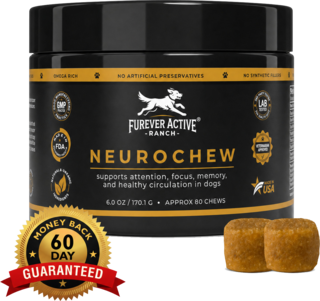
Support your dog's brain health with NeuroChew
NeuroChew is our daily soft chew for dogs, made fresh in the USA. See the ingredients and how it fits into a healthy daily routine.
Learn more about NeuroChew