Dog Brain Health
Dog Dementia? Treatment Options to Discuss With Your Vet


Canine cognitive dysfunction, the medical term for dog dementia, cannot be cured. A realistic treatment plan can still meaningfully support your dog's daily comfort. Most veterinarians recommend combining professional guidance, brain-supportive nutrition, environmental enrichment, a steady daily routine, and sleep-friendly changes for nighttime restlessness. Because individual dogs respond differently, a full veterinary evaluation is the right first step before starting any plan.
Watching a senior dog pace at 2 a.m., stare blankly at a wall, or forget a routine they've known for years is unsettling. Dog dementia? Treatment is not a cure, but it is real, and it is what this article covers in full. If your dog has been showing signs that look like canine cognitive dysfunction, often called dog dementia, you are probably less interested in the biology and more interested in one question: what can actually be done. This guide walks through the realistic treatment landscape, from veterinary evaluation and evidence-backed nutrition to environmental changes, sleep routines, and what genuine improvement looks like, so you can have an informed conversation with your vet.
Related: apple cider vinegar for dogs
What Is Canine Cognitive Dysfunction?
Cognitive Dysfunction Syndrome (CDS), often referred to by owners as canine cognitive dysfunction (CCD) or dog dementia, is a neurodegenerative condition affecting senior dogs. The condition affects a senior dog's awareness and everyday behavior, which is part of why owners reach for the familiar word dementia to describe what they are seeing. Cognitive decline can affect older dogs, and research indicates the likelihood of developing Cognitive Dysfunction Syndrome increases as dogs age.
Your vet typically reaches this conclusion only after ruling out other, more treatable causes of the same behavior changes, since many medical problems can look similar in a senior dog. Early, honest information here matters because the changes are gradual, and owners often notice them long before they have a name for what they're seeing.
Source: Cornell Riney Canine Health Center and Today's Veterinary Practice
What's Actually Happening in an Aging Dog's Brain?
Age-associated cognitive decline in dogs is linked to physical changes in the brain, including oxidative stress and the accumulation of beta-amyloid proteins. Both oxidative stress and the buildup of these proteins are physical changes within the brain itself, which is part of why cognitive decline tends to develop gradually as a dog gets older. Cognitive dysfunction in older dogs may sometimes co-occur with or be impacted by other vascular or circulatory changes in the brain.
This vascular link comes from a small, single case report rather than a large study, so it should be read as one clue about a possible contributing factor, not proof that poor circulation causes cognitive dysfunction in every dog. Findings like this are still early, and they should never be used to suggest that any product improves blood flow to the brain or reverses this kind of decline.
Source: AGE via Springer and Today's Veterinary Practice and Frontiers in Veterinary Science, 2025
How Do Vets Confirm Cognitive Dysfunction, and When Should You Call?
Signs of cognitive dysfunction often overlap with other age-related medical conditions; a full veterinary evaluation is necessary to rule out other health problems. Ask your vet to rule out other possible causes first. Some senior health problems can show up as behavior changes that look similar from the outside, and each of those has its own path forward.
Related: does cosequin really work for dogs
It also helps to note the specific changes you are seeing at home, using the checklist in the next section, so your vet has a clear picture across visits rather than a single office snapshot. Call your vet promptly, rather than waiting for a scheduled checkup, if you notice a sudden change such as new nighttime pacing, disorientation in familiar rooms, a house-soiling accident after months of reliability, or any sign that your dog may be in pain.
Source: Cornell Riney Canine Health Center and Today's Veterinary Practice
How Is Cognitive Decline Tracked and Measured Over Time?
Owners can monitor senior dogs for signs of cognitive dysfunction using the 'DISHA' framework: Disorientation, changed Interactions, Sleep disturbances, House-soiling, and altered Activity levels. Working through each letter with your vet turns vague worry into something specific you can describe and track between visits, which is far more useful than simply saying your dog seems 'off.' The progression of canine cognitive dysfunction is generally evaluated across three stages, mild, moderate, and severe, based on the severity of behavioral changes observed by owners. Staging is not a precise lab test; it is a shared vocabulary that helps you and your vet track whether changes are staying stable or moving faster than expected, which shapes how often you should schedule follow-up visits.
Source: Cornell Riney Canine Health Center and Today's Veterinary Practice
What Does a Realistic Treatment Plan Actually Involve?
A multi-modal approach combining specialized veterinary-recommended nutrition and lifestyle adjustments may help manage cognitive decline; always consult your veterinarian to discuss options tailored to your dog. In practice that means several smaller changes stacked together, not one single product or fix, since no individual supplement, food, or gadget on the market reverses the underlying brain changes on its own. Be skeptical of any product or program promising a fast, total turnaround; the steadiest results usually come from sticking with a modest, consistent plan and giving it time.
Consistency, not intensity, is what tends to separate dogs who do reasonably well from those who don't.
Source: Today's Veterinary Practice and GeroScience via PubMed Central and Peer-reviewed article via PubMed Central
Can Diet and Nutrition Support Your Dog's Brain Health?
Diets containing medium-chain triglycerides (MCTs) may help support cognitive performance in aging dogs by providing an alternative energy source for the brain. As dogs age, their brains can become less efficient at using glucose for fuel, and MCT oil or MCT-enriched therapeutic diets are one way to offer the aging brain a backup fuel source. Diets containing antioxidants and mitochondrial cofactors may help address oxidative stress in the brain and support cognitive wellness in senior dogs.
Related: dog dementia supplements
Ask your vet about a therapeutic senior or cognitive-support diet before assembling a shopping list of individual supplements yourself, since the evidence is strongest for complete, tested formulations rather than a la carte ingredients. Results here tend to be gradual and modest rather than sudden, and not every dog responds the same way, which is normal and not a sign that you are doing something wrong.
Source: Today's Veterinary Practice and AGE via Springer and Peer-reviewed article via PubMed Central
Does Environmental Enrichment and a Steady Routine Help?

Providing environmental enrichment, such as interactive play and mental stimulation, may help support overall cognitive wellness in aging dogs. Short daily sessions of sniff walks, food puzzles, gentle new-trick training, and rotating toys keep a senior dog's brain gently engaged without the frustration that comes from tasks that are too hard for their current stage. Keeping your senior dog's daily routine and home layout consistent may help reduce feelings of disorientation and anxiety.
Feed, walk, and settle your dog at roughly the same times each day, avoid rearranging furniture, keep baby gates and nightlights in the same spots, and give plenty of warning before any change to the household, since predictability tends to lower stress far more than any single product can.
Source: Cornell Riney Canine Health Center and Peer-reviewed article via PubMed Central
Why Do Nighttime Restlessness and Pacing Happen?

Some aging dogs with cognitive dysfunction may experience a pattern of worsening signs in the evening or nighttime, which can manifest as pacing, waking up, or vocalizing. Veterinarians sometimes call this sundowning, and it is thought to relate to disrupted sleep-wake cycles rather than simple bad behavior, so it is not something a dog is doing on purpose. A calm, low-light nighttime routine, a consistent bedtime, a short last walk, and limiting daytime naps can help settle a restless senior dog, though results vary and some dogs still need a vet-guided sleep or behavior plan.
Source: Cornell Riney Canine Health Center and Today's Veterinary Practice
How Should You Respond to Nighttime Accidents or Vocalizing?
Do not punish a senior dog for house-soiling or nighttime vocalizations, as punishment can increase anxiety and exacerbate cognitive signs. Instead, calmly clean up, add more frequent nighttime bathroom breaks, use washable pads or a crate or pen near your bedroom if needed, and reassure your dog with a steady, quiet voice. How you respond in the moment will not undo the underlying condition, but it does affect how safe and secure your dog feels, and that is worth protecting on its own.
Related: dog sleep aggression
Source: Cornell Riney Canine Health Center
What Does Realistic Improvement Look Like Over Time?
Although Cognitive Dysfunction Syndrome is a progressive condition rather than a direct cause of death, it significantly impacts quality of life; ask your veterinarian how to assess your dog's ongoing comfort and progression. Clinical evidence for managing cognitive decline continues to emerge, and individual dogs may respond differently to nutritional or environmental support. A realistic goal is usually fewer bad nights, a bit more engagement during the day, and a slower pace of change, rather than a full return to how your dog acted at age six.
Keep a simple weekly note of sleep, appetite, and mood so you and your vet can see real trends instead of relying on memory alone, and revisit the plan together every few months.
Source: Cornell Riney Canine Health Center and Today's Veterinary Practice and GeroScience via PubMed Central and Peer-reviewed article via PubMed Central
Where NeuroChew fits in all this

From our family ranch, full disclosure: this one is ours
Reading pages like this usually means you're worried about a dog you love, so let's be straight about who we are: NeuroChew is ours. It won't replace the veterinary workup this guide keeps pointing you toward, and it doesn't try to. It's a veterinarian-approved daily soft chew built on phosphatidylserine, Norwegian salmon oil, and beet root with ginger to support normal brain function and healthy circulation as your dog ages.
- ✓ 60-day guarantee: not thrilled? Even the empty bottle gets a full refund
- ✓ Free shipping on every order
- ✓ Multi-bottle packs save up to 40%
"I support NeuroChew because it's the first dog chew that supports both brain function and healthy circulation!" Dr. Ruth Roberts, DVM, CVFT
See What's Inside NeuroChew →Daily support, not medicine. It fits alongside your vet's plan, never in place of it.
Frequently asked questions
What is the best thing for a dog with dementia?
There is no single best product. The most consistent results come from combining a full veterinary evaluation, a therapeutic or cognitive-support diet with MCTs or antioxidants, daily environmental enrichment, and a steady routine, then giving that combination enough time before judging it.
Can older dogs get dementia?
Yes. Cognitive decline can affect older dogs, and research indicates the likelihood of developing Cognitive Dysfunction Syndrome increases as dogs age, which is why most veterinary guidance on this topic focuses on dogs in their senior years.
Related: can i give my dog benadryl for anxiety
What are the three stages of dog dementia?
Vets generally describe progression across three stages, mild, moderate, and severe, based on the severity of behavioral changes you observe at home. Staging is a communication tool for tracking change over time, not a lab test, and your vet is the right person to help place your dog and reassess as things evolve.
How long can a dog with dementia live?
Cognitive dysfunction is a progressive condition rather than a direct cause of death, and it significantly impacts quality of life, so ask your veterinarian how to assess your dog's ongoing comfort and overall health rather than focusing on a single number.
Why can't canine cognitive dysfunction be cured?
Canine cognitive dysfunction involves ongoing changes in brain tissue that current science cannot repair, so no diet, supplement, or medication makes it go away. A realistic treatment plan focuses on supporting comfort, slowing the pace of change, and keeping your dog engaged and safe.
Canine cognitive dysfunction cannot be cured. There is still a lot of room for a meaningful, honest treatment plan built around your vet, steady nutrition, enrichment, routine, and patience with the slower nights. Start with a full veterinary evaluation, pick one or two changes to introduce at a time, and give each one several weeks before judging whether it helped. Small, consistent choices, repeated for months, are what tend to add up for senior dogs and the people who love them.
Get practical dog wellness tips by email
Occasional, useful guidance on keeping your dog healthy and happy. Unsubscribe anytime.
No spam. We respect your inbox.
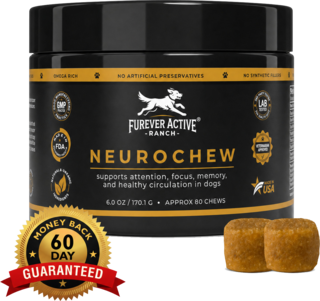
Support your dog's brain health with NeuroChew
NeuroChew is our daily soft chew for dogs, made fresh in the USA. See the ingredients and how it fits into a healthy daily routine.
Learn more about NeuroChew