Dog Brain Health
Dog Food for Joint Health: What to Know


Dog food for joint health is judged by body condition, printed omega-3 support, and vet-guided diet changes, not by bag slogans alone. Weight control and EPA/DHA context matter more than a single hero ingredient on the front panel.
Shoppers type dog food for joint health when stairs get harder and walks slow down. The useful job is not collecting every joint buzzword on a bag.
Related: what causes dementia in dogs
It is ranking the levers that veterinary nutrition actually leans on: body condition, dietary omega-3 fatty acids such as EPA and DHA, honest evidence ceilings, and a clinic checkpoint before any therapeutic diet swap. Fiber and beetroot show up later only as formulation context, not as a substitute for joint criteria.
NeuroChew is a daily brain-health soft chew with printed actives. Keep it out of the joint-diet ranking job and let food-level decisions stand on their own.
AT A GLANCE
The pick: Our pick is NeuroChew, our own daily brain-health chew, held to the standard this guide teaches.
Reason one: Built for daily brain support, not sedation.
Reason two: Veterinarian-approved, with Dr. Ruth Roberts, DVM, CVFT as the named endorser.
Reason three: A 60-day guarantee, refunded even on an empty bottle.
Skip it if: Your dog has new, sudden, or severe symptoms, is pregnant, nursing, or a puppy, is on medication, or is managing an existing condition without your veterinarian's input.
Stiffness signs that put food on the table

Common signs of joint discomfort include stiffness when getting up, hesitancy to climb stairs, or moving more slowly on walks. Those patterns are why owners start reading joint-support food labels in the first place.
Write down when stiffness shows up (cold mornings, after car rides, late-day walks) so the clinic visit is specific.
Food can support comfort goals only after pain, injury, and other medical causes are on the table. A bag that promises mobility while your dog still cannot rise cleanly is marketing, not a plan.
Source: VCA Animal Hospitals and PetMD
Bottom line: stiffness after rest is a reason to review food and body condition with your vet, not to self-diagnose from a bag.
Weight is the first joint-food lever
Keeping your dog at a healthy weight is vital for joint health, as extra pounds place mechanical strain on vulnerable joints. That is the highest-leverage food decision most households can make without inventing a new supplement stack.
Score ribs and waist weekly, not just the number on the bag's calorie line.
If the current kibble keeps weight creeping up, no omega claim rescues the mechanical load. Ask your veterinarian for a target body-condition score before you chase a premium joint formula.
Source: Today's Veterinary Practice and VCA Animal Hospitals and PetMD
Bottom line: extra pounds load joints every step; body condition often beats any single joint claim on a label.
EPA and DHA on the joint-food panel
Dietary omega-3 fatty acids, such as EPA and DHA, may help support joint health and comfort in dogs. On the label, that means hunting for named EPA/DHA amounts or a clear fish-oil inclusion you can discuss with your vet, not a vague ocean graphic.
Nutrition reviews treat these fatty acids as adjuncts inside a wider plan that still includes weight and controlled activity.
If the panel hides milligrams behind a proprietary blend, run the printed-amount test and assume the worst. NeuroChew prints Norwegian Salmon Oil at 100 mg per serving for brain-health nutrition context.
It is not positioned as a therapeutic joint diet.
Source: Today's Veterinary Practice
Bottom line: look for dietary omega-3 context you can verify, not a vague fish-oil halo on the front.
Evidence ceilings on joint-support ingredients
Nutritional responses vary by individual dog, and the clinical evidence for some joint-support ingredients is still developing. That ceiling is the honest frame for many mobility add-ins shops stack under joint claims.
Related: dog dementia diet
A fair read separates food-level support from disease treatment language the packet does not authorize.
If two bags both refuse to print usable amounts, neither wins on transparency. Keep notes for four to six weeks after any diet change so you are judging gait and stairs, not packaging hope.
Bottom line: emerging evidence is not a free pass for cure language on retail food.
Fiber only as metabolic and weight context
Including appropriate fiber sources in your dog's diet may help support metabolic health and digestion, which indirectly benefits weight management and joint health. That is secondary context after EPA/DHA and body condition, not the headline of these bags.
Use fiber talk to judge stool quality and calorie density, not as a mobility miracle story.
Do not let a beet pulp callout distract you from calories per cup and the weight trend on the scale. Formulation literacy stays useful only when it serves the weight lever.
Source: Peer-reviewed article via PubMed Central
Bottom line: fiber can support digestion and weight management; it is not a stand-alone joint active.
What fiber research actually measures
Dietary fiber sources may affect a dog's digestive function and fecal microbiota. That is real dog nutrition science, and it still does not answer the joint-food shopping question by itself.
Choosing specific fiber sources may help support a dog's overall metabolic health when the rest of the calorie math is honest.
Read those findings as bowl-quality context while weight and omega-3 criteria stay in charge. If a brand leads a joint page with fiber alone, it is dodging the harder label work.
Bottom line: fiber studies speak to digestion and microbiota, not to curing stiff joints.
Beetroot stays general functional-food context
Beetroot is studied as a functional food that may provide various health-supporting properties. On this page it explains why a plant powder can appear in a multi-ingredient chew or kibble base, not why a joint diet is complete.
Keep beetroot talk in the phytonutrient aisle rather than treating it as mobility medicine.
NeuroChew lists Organic Beet Root Powder at 20 mg as a whole-food ingredient with a printed amount. That printed line is label honesty about what is in the chew, not proof of a mobility outcome.
Bottom line: beetroot is general functional-food context, not a dog-specific joint proof point.
Ask before you add beetroot toppers
Beetroot is known to contain natural antioxidants, but you should discuss its use with your vet before adding it as a functional food for joint support. Kitchen experiments are not the same as a complete and balanced joint-support diet.
If you already run a therapeutic formula, random toppers can wreck the calorie and nutrient math your veterinarian set.
Related: dog dementia when to put down
Bring the idea to the clinic with your stiffness log instead of improvising from a human nutrition headline.
Bottom line: antioxidants on a blog are not a green light to dose kitchen beetroot without your vet.
Responses vary; track the dog in front of you
Individual responses to dietary adjustments vary, and research into the specific benefits of these functional ingredients is still emerging. Use a one-page log: stairs, rise-from-rest time, walk distance, and stool quality after a food change.
That turns marketing noise into household data your veterinarian can use.
If nothing measurable moves in a few weeks, escalate rather than stacking another unproven topper. Variation is normal; silence on the log is not a reason to keep buying hope.
Bottom line: emerging research means your dog's response still needs a simple log, not a forum average.
Clinic checkpoint before therapeutic diet swaps
Always consult your veterinarian before introducing therapeutic joint diets or supplements to ensure they are safe and appropriate for your dog's specific needs. Bring the current bag, the calorie math, and your stiffness log to that visit.
Prescription diets, over-the-counter mobility formulas, and chew toppers are not interchangeable without review.
Pain control and imaging decisions stay clinical. Food support only works inside that wider plan.
Source: Today's Veterinary Practice and VCA Animal Hospitals
Bottom line: therapeutic joint diets and add-ons need a vet gate for safety and fit.
Home setup still pairs with the bowl

Providing comfortable, supportive bedding and minimizing slippery surfaces can help make daily life easier for dogs experiencing joint stiffness. Food decisions do not erase a slick hallway that steals traction on every turn.
Add rugs on polished floors, raise bowls only if your vet agrees, and keep jump-downs off the couch when mornings are stiff.
These are low-cost supports that make the nutrition plan easier to judge because the dog is not fighting the floor. Pair the home setup with the weight and omega work above instead of treating either lane as optional.
Bottom line: bedding and traction cut daily strain while food work is underway.
Where NeuroChew sits next to joint food
Before changing your dog's diet for health reasons, consult your veterinarian to discuss options tailored to your dog's individual needs. That same checkpoint applies when a brain-support chew enters the cart beside a mobility kibble.
NeuroChew is a daily soft chew for brain-health nutrition context.
Serving size starts at 2 soft chews (4g), with phosphatidylserine 5 mg, vitamin B1 15 mg, alpha lipoic acid 25 mg, Norwegian salmon oil 100 mg, and huperzine-A 100 mcg per serving on a weight-based chart. Keep the product discussion on printed actives and structure-function brain support.
Related: what can i give my dog for anxiety
Keep joint-diet criteria, pain plans, and therapeutic food choices in a separate clinic conversation with your veterinarian.
Bottom line: NeuroChew is a printed-amount brain chew; joint-food criteria stay a separate clinic decision.
So, where does NeuroChew fit into all this?
Full transparency: NeuroChew is ours. It's a veterinarian-approved daily soft chew that supports normal brain function and healthy circulation in dogs.
It's daily support, not medicine, designed to fit alongside your vet's plan rather than replace it. Dr.
Ruth Roberts, DVM, CVFT, puts it this way: "I support NeuroChew because it's the first dog chew that supports both brain function and healthy circulation!" If the signs above sound familiar, a daily brain-support routine is one of the simplest places to start.
Frequently asked questions
What should I feed my dog for joint health?
Start with a calorie plan that holds a healthy weight, then prefer foods where omega-3 fatty acids such as EPA and DHA are discussed in plain nutrition terms you can verify with your veterinarian. Treat joint-support add-ins as adjuncts with developing evidence, not as a cure on the bag. Therapeutic diet changes still need a clinic review.
What are the 5 worst foods that cause joint pain?
This packet does not publish a ranked list of five worst foods for joint pain. The practical risk pattern is excess calories that drive weight gain and mechanical joint load. Ask your veterinarian before cutting major food groups or adding human leftovers as a joint strategy.
What is the 90/10 rule for dogs?
This packet does not define a 90/10 feeding rule. For joint goals, prioritize complete nutrition, body-condition targets, and vet-guided calories over internet ratio slogans. If treats crowd out balanced meals, joint-friendly math collapses regardless of the slogan.
What not to feed a dog with arthritis?
Avoid unsupervised diet experiments and anything your veterinarian has flagged for your dog's other conditions. Excess calories that push weight up work against joint comfort. This page cannot list a universal banned-foods chart beyond that weight and safety frame.
Do omega-3s in dog food help joints?
Dietary omega-3 fatty acids such as EPA and DHA may help support joint health and comfort when they sit inside a wider plan. Confirm amounts and total calories with your veterinarian rather than trusting front-of-bag fish imagery alone.
Is NeuroChew a joint-health dog food?
No. NeuroChew is a daily brain-health soft chew with printed active amounts. Joint-food criteria, therapeutic diets, weight targets, and clinic-led comfort plans stay with your veterinarian and the bowl decisions above.
Dog food for joint health is a ranking problem: body condition first, EPA/DHA honesty second, evidence ceilings third, and a veterinarian before any therapeutic swap. Fiber and beetroot belong only as secondary formulation literacy.
Keep a simple mobility log so the bag does not outvote the dog. If you later compare a daily brain-support chew, prefer printed milligrams and a plain commercial refund policy you can verify on the label page, then keep that purchase separate from the joint-food ranking job.
References
- Nutrition and Osteoarthritis: What Do We Know?, Today's Veterinary Practice. https://todaysveterinarypractice.com/nutrition/nutrition-and-osteoarthritis-what-do-we-know/
- The impact of fiber source on digestive function, fecal microbiota, and metabolic health in dogs, Peer-reviewed article via PubMed Central. https://pmc.ncbi.nlm.nih.gov/articles/PMC10812474/
- Beetroot as a functional food with huge health benefits, Peer-reviewed article via PubMed Central. https://pmc.ncbi.nlm.nih.gov/articles/PMC8565237/
- Arthritis in Dogs, VCA Animal Hospitals. https://vcahospitals.com/know-your-pet/arthritis-in-dogs
- Arthritis in Dogs, PetMD. https://www.petmd.com/hub/dog-arthritis
As of July 2026
Get practical dog wellness tips by email
Occasional, useful guidance on keeping your dog healthy and happy. Unsubscribe anytime.
No spam. We respect your inbox.
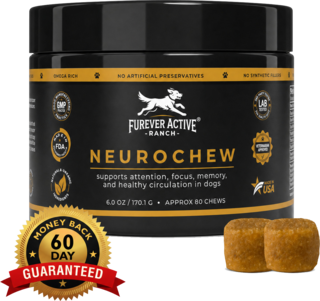
Support your dog's brain health with NeuroChew
NeuroChew is our daily soft chew for dogs, made fresh in the USA. See the ingredients and how it fits into a healthy daily routine.
Learn more about NeuroChew