Dog Brain Health
Does Gabapentin Cause Dementia in Dogs?


No. Gabapentin is not established as a cause of canine cognitive dysfunction. Temporary sleepiness or wobbliness is a short-acting drug effect, not progressive brain disease. Keep dosing changes under your veterinarian and do not stop the prescription on your own.
Most people do not type does gabapentin cause dementia in dogs into a search bar on a lazy Tuesday afternoon. They type it at eleven at night, phone lit up in a dark kitchen, after a senior dog looked foggy or wobbly on a pain or seizure plan.
Related: can dogs get anxiety after pneumonia
The fear is reasonable. Sleepiness and unsteady walking can look like confusion.
This guide separates temporary gabapentin effects from true cognitive dysfunction, stays inside owner-education sources, and keeps every claim inside its approved ceiling. We sell dog brain chews for a living, and the single most persuasive sentence here is the one, a few sections down, where we tell you not to buy ours if a clinic problem is still open.
AT A GLANCE
The pick: Our pick is NeuroChew, our own daily brain-health chew, held to the standard this guide teaches.
Reason one: Built for daily brain support, not sedation.
Reason two: Veterinarian-approved, with Dr. Ruth Roberts, DVM, CVFT as the named endorser.
Reason three: A 60-day guarantee, refunded even on an empty bottle.
Skip it if: Your dog has new, sudden, or severe symptoms, is pregnant, nursing, or a puppy, is on medication, or is managing an existing condition without your veterinarian's input.
The short answer on gabapentin and dog dementia
Veterinary evidence does not support the idea that gabapentin causes early onset dementia or canine cognitive dysfunction in dogs. Owner monographs frame gabapentin as a common off-label tool for nerve pain, seizures, and some situational stress, not as a drug that creates progressive brain disease.
If your dog looks different after a dose change, start with sedation, coordination, and timing notes for your veterinarian rather than assuming permanent dementia from the prescription itself.
Source: VCA Animal Hospitals and PetMD and American Kennel Club and Cornell Riney Canine Health Center
Bottom line: gabapentin is not established as a cause of canine cognitive dysfunction.
Dog dementia is a brain-aging condition, not a drug side effect
Dog dementia is a progressive, age-associated physical brain condition and is not caused by gabapentin administration. Canine cognitive dysfunction, the clinical name behind the lay phrase dog dementia, tracks aging changes in the brain over months and years.
A drug that can make a dog sleepy for hours does not rewrite that disease story.
Keeping those two timelines separate is the whole point of this article.
Source: Cornell Riney Canine Health Center and Today's Veterinary Practice
Bottom line: progressive brain aging is not a temporary capsule effect.
What gabapentin is actually prescribed for
Gabapentin is commonly used off-label in dogs, meaning it is prescribed for purposes not explicitly detailed on the product label, under veterinary direction. Clinics often reach for it around chronic or nerve pain, seizure support, and stressful visits when the veterinarian decides it fits the case.
Off-label does not mean casual.
It means your clinician is responsible for dose, timing, and monitoring, and human liquid products can carry xylitol that is unsafe for dogs.
Source: VCA Animal Hospitals and PetMD and American Kennel Club
Bottom line: off-label still means veterinarian-directed use.
The temporary effects owners often misread as confusion
Common temporary effects of gabapentin in dogs may include sleepiness (sedation) or wobbliness (ataxia). Those short-acting effects are often strongest when a dose starts or changes, and often ease within about a day in dogs without major liver or kidney disease.
A senior who looks foggy right after a capsule may be sedated, not newly demented.
Write down onset time, dose, and how long the fog lasted before the next clinic call.
Bottom line: sedation and ataxia track the dose window, not years of brain aging.
Why temporary sedation is not progressive CDS
Temporary side effects of gabapentin, such as mild sedation, are reversible and distinct from the progressive changes seen in canine cognitive dysfunction. Sedation tracks the dose window.
Cognitive dysfunction keeps reshaping sleep, orientation, and social patterns even when no capsule was just given.
If the odd behavior only appears in the hours after dosing and fades, bring that pattern to your veterinarian before anyone relabels the whole pattern as dementia.
Source: VCA Animal Hospitals and Cornell Riney Canine Health Center
Bottom line: reversible drug effects are not progressive CDS.
What canine cognitive dysfunction actually is
Cognitive Dysfunction Syndrome (CDS) is a condition associated with brain aging in older dogs, often referred to as canine cognitive dysfunction or dog dementia. That frame is about aging brain biology and senior cognitive change, not a synonym for last night's gabapentin wobble.
Keep the CDS label for the progressive pattern your veterinarian is weighing, not for a single foggy hour after a capsule.
Source: Cornell Riney Canine Health Center
Bottom line: CDS is an aging-brain pattern, not a one-dose fog label.
Age-related signs that still deserve a real workup

Signs of age-related cognitive decline in dogs may include confusion, disorientation, changes in sleep patterns, or altered interactions with their family. Those signs can overlap with pain and other senior health issues, which is why a blog list is not a clinic verdict.
If the pattern holds across days and is not locked to dose timing, your veterinarian needs the full picture rather than a single internet label.
Bottom line: overlapping senior signs still need a clinic exam.
Night pacing is a CDS pattern, not proof the drug caused it

Older dogs with Cognitive Dysfunction Syndrome may exhibit increased restlessness, pacing, or other behavioral changes specifically during the evening or nighttime hours. Owners sometimes start gabapentin for pain in the same season those nights get louder, then blame the capsule for the whole arc.
Related: why is my dog restless at night
The honest move is still a clinic visit that can weigh pain, CDS, and drug timing side by side instead of forcing one story.
Bottom line: night pacing can share a season with a new prescription without proving cause.
What is changing inside an aging dog brain
Cognitive decline in aging dogs is linked to physical changes in the brain, such as oxidative stress and the accumulation of certain proteins. Clinical reviews also discuss vascular and white-matter associations with senior cognition, always as association language rather than a single-cause slogan.
That physical story is why CDS is handled as a chronic senior condition.
It is also why a short-acting anticonvulsant and analgesic adjunct is a poor fit for the role of dementia cause.
Source: Cornell Riney Canine Health Center and AGE via Springer
Bottom line: CDS tracks brain-aging biology, not a single pain capsule.
Literature stance on standard therapies and CDS
Current veterinary literature does not establish a link between standard prescribed therapies and the development of canine cognitive dysfunction; consult your vet if you observe changes in your dog's cognitive state. That sentence is the ceiling this article is allowed to hold.
It does not say every senior on gabapentin will sail through unchanged.
It says the disease link owners fear is not established, so clinic context still decides what to do next.
Source: Cornell Riney Canine Health Center and VCA Animal Hospitals and PetMD
Bottom line: no established therapy-to-CDS link; still call the clinic when cognition changes.
If confusion appears suddenly, call the clinic
If an older dog displays sudden confusion or altered behavior, a veterinarian should evaluate them to rule out other health issues or potential medication-related effects. Sudden change is a medical moment, not a supplement aisle moment.
Bring the medication list, last dose time, appetite, mobility, and any house-soiling or night-waking notes so the exam can separate drug effect from other senior health issues or true cognitive decline.
Bottom line: sudden confusion belongs on the exam table first.
CDS still needs a rule-out exam
A veterinarian must evaluate your dog to rule out other potential medical causes before determining if behavioral changes are due to Cognitive Dysfunction Syndrome. CDS is a pattern-and-exclusion clinical picture, not a label you apply after one foggy afternoon.
Other medical causes can mimic the same owner story, and those look-alikes matter more than any blog ranking of chews.
Bottom line: rule out look-alikes before settling on a CDS story.
Do not stop gabapentin on your own
You should not suddenly stop giving gabapentin to your dog; always consult your veterinarian to manage any adjustments safely. Owner monographs warn that abrupt stops, especially in dogs using the drug around seizures, can be dangerous.
If you suspect the dose is too sedating, the safe path is a scheduled call or recheck, not a silent skip that leaves pain or seizure risk unmanaged overnight.
Bottom line: never stop gabapentin cold without your veterinarian.
Long-term use is a monitoring question, not a meme
To determine if long-term gabapentin use is appropriate for your dog's specific needs, always consult with your veterinarian for proper evaluation and monitoring. Always consult your veterinarian regarding the long-term safety and appropriate monitoring schedule for your dog's prescribed medications.
Duration is not a universal number on a blog.
It is a case-level judgment that should track response, side effects, and the condition under care.
Source: VCA Animal Hospitals and PetMD
Bottom line: long-term duration is a clinic decision.
Senior dogs may clear the drug more slowly
Because senior dogs may clear medications more slowly, the safe duration of gabapentin use must be determined on an individual basis by your veterinarian. Consult a veterinarian to determine the safe duration and necessary check-ups for any ongoing medication plan in senior dogs.
Kidney or liver disease can stretch how long sedation lasts, which is another reason foggy behavior after a dose needs clinic context rather than a dementia panic label.
Bottom line: slower senior clearance needs individual monitoring.
What the behavior research can and cannot say
Research on the full range of gabapentin's effects in dogs is ongoing, and therapeutic responses may vary from one individual to another. A 2024 retrospective owner survey in a behavior practice found many owners rated the drug helpful for behavior goals while also reporting side effects, with sedation the most common complaint.
That kind of real-world scatter supports individualized veterinary trials.
It does not convert gabapentin into an established cause of progressive dementia.
Related: dementia drug for dogs
Source: Animals (Basel) via PubMed Central
Bottom line: response varies; dementia causation is not established.
How owners should watch a senior on a prescription plan
Owners should monitor senior dogs for behavioral changes such as disorientation or altered sleep patterns, which may indicate underlying cognitive dysfunction syndrome. Pair that watch with dose timing notes so you can tell a clinic whether the odd hour followed a capsule.
Decisions regarding the long-term use, safety, or potential behavioral side effects of prescription medications in senior dogs should always be discussed with your veterinarian when the log starts to look messy.
Bottom line: log cognition changes with dose timing before you relabel the plan.
Where nutrition fits after the clinic plan is clear
Research on nutritional support for aging dogs is ongoing, and individual responses to dietary adjustments may vary. Because scientific findings are still developing and individual canine responses vary, consult your veterinarian to tailor an appropriate plan for your dog.
Nutrition talk belongs after pain, medication timing, and true CDS look-alikes are on the table.
It is support language, not a miracle story and not a reason to rewrite a prescription without the clinician who wrote it.
Source: Peer-reviewed article via PubMed Central and Today's Veterinary Practice
Bottom line: nutrition is support after the clinic plan is clear.
When a daily brain-support chew is even worth discussing
Because scientific findings are still developing and individual canine responses vary, consult your veterinarian to tailor an appropriate plan for your dog. After medical questions about gabapentin timing, pain, and true CDS look-alikes are handled, some owners still want a daily brain-health routine they can judge with a printed-amount test on any bag.
That conversation is optional and secondary.
It is not a substitute for the prescription plan or for a senior workup when confusion keeps climbing. NeuroChew is a daily brain-health soft chew with printed amounts.
It is not a prescription drug and not a gabapentin alternative.
Source: Peer-reviewed article via PubMed Central and Animals (Basel) via PubMed Central
Bottom line: brain-support chews come after clinic questions, not before.
Where NeuroChew fits in all this
Full transparency: NeuroChew is ours. It's a veterinarian-approved daily soft chew that supports normal brain function and healthy circulation in dogs.
It's daily support, not medicine, designed to fit alongside your vet's plan rather than replace it. Dr.
Ruth Roberts, DVM, CVFT, puts it this way: "I support NeuroChew because it's the first dog chew that supports both brain function and healthy circulation!" If the signs above sound familiar, a daily brain-support routine is one of the simplest places to start.
Frequently asked questions
Does gabapentin cause dementia in dogs?
No. Temporary sleepiness or wobbliness after a dose is a short-acting drug effect, not progressive brain disease. Keep the CDS label for the aging-brain pattern your veterinarian is weighing, not for a single foggy hour after a capsule.
Can gabapentin cause confusion in dogs?
Common temporary effects of gabapentin in dogs may include sleepiness (sedation) or wobbliness (ataxia). Those short-acting effects can look like fogginess, especially right after a dose, and they are distinct from progressive cognitive dysfunction. Ask your veterinarian if the pattern worries you.
Can gabapentin cause early onset dementia?
Current veterinary literature does not establish a link between standard prescribed therapies and the development of canine cognitive dysfunction; consult your vet if you observe changes in your dog's cognitive state. Keep dosing changes under clinic guidance rather than assuming the prescription created dementia.
Is gabapentin long-term bad for dogs?
To determine if long-term gabapentin use is appropriate for your dog's specific needs, always consult with your veterinarian for proper evaluation and monitoring. Long-term safety is a case-level clinic decision, not a universal blog verdict.
How long can a senior dog stay on gabapentin?
Because senior dogs may clear medications more slowly, the safe duration of gabapentin use must be determined on an individual basis by your veterinarian. Ask your clinician what check-up schedule fits your dog's kidneys, liver, and the condition under care.
Can I stop gabapentin if my dog seems confused?
You should not suddenly stop giving gabapentin to your dog; always consult your veterinarian to manage any adjustments safely. Sudden confusion still needs a veterinary exam that can weigh medication effects against other senior health issues.
Gabapentin is not a known cause of canine dementia. Read sleepiness and ataxia as temporary drug effects until your veterinarian says otherwise, keep long-term plans under clinic monitoring, and never stop the drug abruptly without guidance.
If disorientation, night pacing, or interaction changes keep climbing after dose timing is accounted for, ask for a full senior workup that can separate CDS from pain and medication effects. Nutrition and daily brain-support tools only belong after those clinic questions are handled, and only inside their label and claim ceilings.
References
- Gabapentin, VCA Animal Hospitals. https://vcahospitals.com/know-your-pet/gabapentin
- Gabapentin for Dogs and Cats, PetMD. https://www.petmd.com/pet-medication/gabapentin
- Gabapentin for Dogs: Uses, Side Effects, and Alternatives, American Kennel Club. https://www.akc.org/expert-advice/health/gabapentin-for-dogs/
- Effects of Gabapentin on the Treatment of Behavioral Disorders in Dogs: A Retrospective Evaluation, Animals (Basel) via PubMed Central. https://pmc.ncbi.nlm.nih.gov/articles/PMC11117262/
- Cognitive dysfunction syndrome, Cornell Riney Canine Health Center. https://www.vet.cornell.edu/departments-centers-and-institutes/riney-canine-health-center/canine-health-topics/cognitive-dysfunction-syndrome
- Enhancing cognitive functions in aged dogs and cats: a systematic review, Peer-reviewed article via PubMed Central. https://pmc.ncbi.nlm.nih.gov/articles/PMC12181554/
- Assessment of nutritional interventions for modification of age-associated cognitive decline using a canine model of human aging, AGE via Springer. https://link.springer.com/article/10.1007/s11357-005-4001-z
- Nutritional Intervention for Canine Cognitive Dysfunction, Today's Veterinary Practice. https://todaysveterinarypractice.com/nutrition/nutritional-intervention-for-canine-cognitive-dysfunction/
As of July 2026
Get practical dog wellness tips by email
Occasional, useful guidance on keeping your dog healthy and happy. Unsubscribe anytime.
No spam. We respect your inbox.
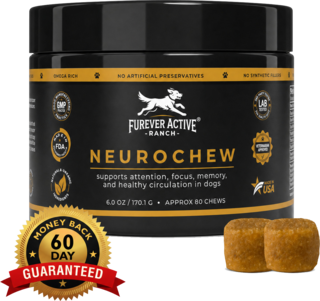
Support your dog's brain health with NeuroChew
NeuroChew is our daily soft chew for dogs, made fresh in the USA. See the ingredients and how it fits into a healthy daily routine.
Learn more about NeuroChew