Dog Brain Health
Calming Techniques for Dogs: A Practical Comparison


Calming techniques for dogs work best as a stack, not a single silver bullet. Pair behavior work with environment tools, then decide with your veterinarian whether a nutritional option belongs in the plan.
When your dog paces the hallway at 2 a.m., you do not need another vague tip list. You need a practical comparison of calming techniques for dogs, with each option's honest ceiling written in plain English. Real technique work means systematic desensitization, counterconditioning, a predictable safe space, enough physical and mental work, and stable daily routines after medical problems are ruled out when signs are new or severe. This page also places pheromones, pressure wraps, and common nutritional ingredients in that stack, and shows where a daily brain-health chew like NeuroChew sits. NeuroChew is built for daily brain support, not sedation. Our label has no melatonin and no sedative herbs. Every active we use prints its milligram amount.
Related: 4health calming aid supplement bars for dogs
AT A GLANCE
The pick: Our pick is NeuroChew, our own daily brain-health chew, held to the standard this guide teaches.
Reason one: Built for daily brain support, not sedation.
Reason two: Veterinarian-approved, with Dr. Ruth Roberts, DVM, CVFT as the named endorser.
Reason three: A 60-day guarantee, refunded even on an empty bottle.
Skip it if: Your dog has new, sudden, or severe symptoms, is pregnant, nursing, or a puppy, is on medication, or is managing an existing condition without your veterinarian's input.
Why one calming method rarely holds on its own

The hallway pace at 2 a.m. rarely has one switch. When addressing canine situational stress, a veterinarian may recommend combining behavioral modification with complementary options like pheromones or nutritional supplements rather than relying on a single method.
That stacking idea is the backbone of any honest comparison of techniques. Behavior work changes what your dog practices.
Environment tools change the room your dog practices in.
Nutrition, when it belongs at all, is a slow daily layer, not a switch you flip before a thunderstorm. Keep a short log of trigger, body language, start time, duration, intensity, recovery, and what you already tried.
Our house take sorts tools by job rather than by packaging: teaching and management do the heavy lift, room setup supports the practice space, nutrition is optional when appropriate, and prescription care is a clinic call when your veterinarian says the case needs it.
Source: VCA Animal Hospitals
Bottom line: stack behavior, environment, and nutrition only after a vet-framed plan.
Desensitization and counterconditioning as the learning core
Technique work is the lane most product lists skip. Because individual dogs respond differently to environmental modifications, supplements, and pressure wraps, there is no single best calming aid; consulting a veterinarian is recommended to tailor a plan for your dog's specific needs.
Once medical red flags are cleared, systematic desensitization is graded exposure at a level the dog can handle without tipping into panic.
You lower the intensity of the trigger until the dog stays under threshold, then raise intensity in small steps as the dog succeeds. Counterconditioning pairs the trigger with something the dog likes so the emotional meaning can shift.
If the dog is already over threshold, panicking, injuring herself, or unable to take food, you are not desensitizing.
Related: adaptil calming collar for dogs
You are flooding. Flooding is not the plan.
Keep settle and departure reps short enough that recovery stays quick.
Source: VCA Animal Hospitals and Veterinary Evidence
Bottom line: graded learning under threshold beats flooding and product-first shopping.
L-theanine as aisle context, not a default
Ingredient shelves get loud fast. L-theanine, an amino acid, may help support a calm state in dogs experiencing situational stress or environmental changes, though owners should consult a veterinarian to determine if it is appropriate.
Treat that sentence as aisle context only.
NeuroChew does not list L-theanine on its label. Many calming products lean on amino acids or herbal blends; some print amounts, and many hide them behind proprietary blends.
Run the printed-amount test before you buy any of them.
If the label will not show the milligrams, assume fairy-dusting until a number is printed.
Bottom line: L-theanine is category context here, and NeuroChew does not list it.
Pheromone support changes the room, not the training plan
Environment tools sit beside training, not above it. Synthetic dog-appeasing pheromones mimic natural canine chemical signals and may help create a more comforting environment for stressed dogs, especially when used as part of a broader behavioral plan.
Diffusers, collars, and sprays do not replace a settle cue, departure rehearsal, or medical rule-out.
Related: best calming treats for dogs vet-recommended
Where they help, they usually help as background while you still teach, manage, and stop panic rehearsal. Owners sometimes pair pheromones with white noise or a predictable wind-down playlist; that stack is still environment work.
A safe space is a trained recovery zone, not a punishment crate and not a locked panic room.
Bottom line: pheromones can support the room while behavior work still does the teaching.
Alpha-casozepine and what limited evidence actually means
Milk-protein marketing travels far on packaging. Alpha-casozepine, a natural ingredient derived from milk protein, has been evaluated in veterinary studies for its potential to help manage stress-related behaviors in dogs, though scientific findings are still emerging.
Emerging is not the same as settled.
NeuroChew does not list alpha-casozepine, so this section is category context only. If a bag leans hard on milk-protein language, ask for the printed amount and the study design, not the mood board.
Limited evidence still has a use: it tells you not to bet the household on one ingredient class.
Source: Veterinary Evidence
Bottom line: alpha-casozepine evidence is still emerging, and it is not on the NeuroChew label.
Pressure wraps and vests as a reversible experiment
Some dogs want steady contact; others fight the gear. Deep-pressure wraps or vests may help reduce visible signs of stress in some anxious or fearful dogs, but current veterinary evidence regarding their overall effectiveness remains limited and response varies.
Limited evidence is still honest evidence.
Fit, duration, and whether the dog can still move and cool matter more than brand embroidery. A wrap is not a behavior plan, and it is not a chew.
Related: calming music for dogs
Use it as one reversible experiment inside a wider plan, then keep only what your dog actually shows you.
Exercise and enrichment support coping capacity; they do not replace graded learning for a known fear trigger.
Bottom line: try pressure gear as a short, reversible test, not as the whole plan.
How to rank options when there is no single winner

Owners want a podium. Because individual dogs respond differently to environmental modifications, supplements, and pressure wraps, there is no single best calming aid; consulting a veterinarian is recommended to tailor a plan for your dog's specific needs.
Our house take sorts options by job instead of by packaging: teaching and management do the heavy lift, environment supports the room, nutrition is optional when appropriate, and prescription care is a clinic call when your veterinarian says the case needs it.
Get professional help when safety is at risk, progress stalls, or new severe signs appear. Keep this page focused on multimodal technique comparison, not on crowning one SKU.
Bottom line: match tools to job and your dog's response, not to a universal winner list.
Our answer to the calming-aid question
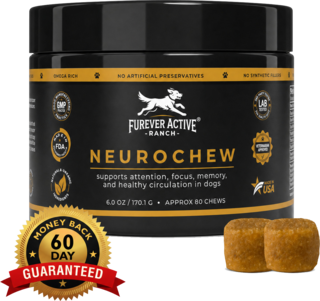
Full transparency: NeuroChew is ours. It's a veterinarian-approved daily soft chew that supports normal brain function and healthy circulation in dogs.
It's daily support, not medicine, designed to fit alongside your vet's plan rather than replace it. Dr.
Ruth Roberts, DVM, CVFT, puts it this way: "I support NeuroChew because it's the first dog chew that supports both brain function and healthy circulation!" If the signs above sound familiar, a daily brain-support routine is one of the simplest places to start.
Frequently asked questions
What are the best calming techniques for dogs?
Start with behavior modification and management, including graded desensitization and counterconditioning under threshold. Then add environment tools such as pheromones or pressure wraps when they fit the case. Nutritional options are a later layer only after veterinary input.
Related: calming treats for dogs
What is the most effective calming aid for dogs?
There is no universal winner across environment tools, wraps, and supplements. Effectiveness depends on the dog, the trigger, and whether the aid sits inside a veterinary-guided plan rather than standing alone.
What do vets recommend for calming dogs?
Many clinicians favor a multimodal plan that can combine behavior work, complementary environment tools, and nutritional products when they match the dog after a health check. Ask your veterinarian before stacking new products.
What is the 7 7 7 rule for dogs?
That popular training shorthand is not covered by the veterinary sources on this page. For calming choices, work with your veterinarian on a tailored plan and keep technique drills short enough that your dog can recover between reps.
Should I try a wrap, a pheromone product, or a chew first?
Clear medical causes first. Then rehearse settle and departure skills. Add room tools such as pheromones or a pressure wrap as reversible tests. Save ingestible products for after your veterinarian says a nutritional layer is appropriate.
Where does NeuroChew fit in a calming-techniques comparison?
NeuroChew is a daily brain-health chew with printed amounts and no melatonin or sedative herbs on the label. It is not a sedative-style calming aid and does not replace behavior work, environment tools, or veterinary care.
A fair technique comparison ends the same way a good clinic visit ends: with a ranked plan, not a trophy product. Start with a vet check when behavior changes are new or sudden.
Build behavior-plus-environment work next. Only then decide whether a nutritional option belongs in the bowl.
If you want a daily brain-health routine rather than a sedative-style chew, NeuroChew prints every active amount, including Phosphatidylserine at 5 mg, Vitamin B1 at 15 mg, Huperzine-A at 100 mcg, Alpha Lipoic Acid at 25 mg, and Norwegian Salmon Oil at 100 mg. Serving size is 2 soft chews (4g), with weight-based dosing from 2 chews under 30 lbs up to 7 chews at 150-180 lbs.
The 60-day guarantee is commercial risk reversal, not an efficacy promise.
References
- Behavior Counseling - Complementary Medication, VCA Animal Hospitals. https://vcahospitals.com/know-your-pet/behavior-counseling---medication-complementary
- L-Theanine, VCA Animal Hospitals. https://vcahospitals.com/know-your-pet/l-theanine
- Pheromones, VCA Animal Hospitals. https://vcahospitals.com/know-your-pet/pheromones
- Is Alpha-casozepine Efficacious at Reducing Anxiety in Dogs?, Veterinary Evidence. https://veterinaryevidence.org/index.php/ve/article/view/67
- Are Pressure Vests Beneficial at Reducing Stress in Anxious and Fearful Dogs?, Veterinary Evidence. https://veterinaryevidence.org/index.php/ve/article/view/152
As of July 2026
Get practical dog wellness tips by email
Occasional, useful guidance on keeping your dog healthy and happy. Unsubscribe anytime.
No spam. We respect your inbox.
Support your dog's brain health with NeuroChew
NeuroChew is our daily soft chew for dogs, made fresh in the USA. See the ingredients and how it fits into a healthy daily routine.
Learn more about NeuroChew